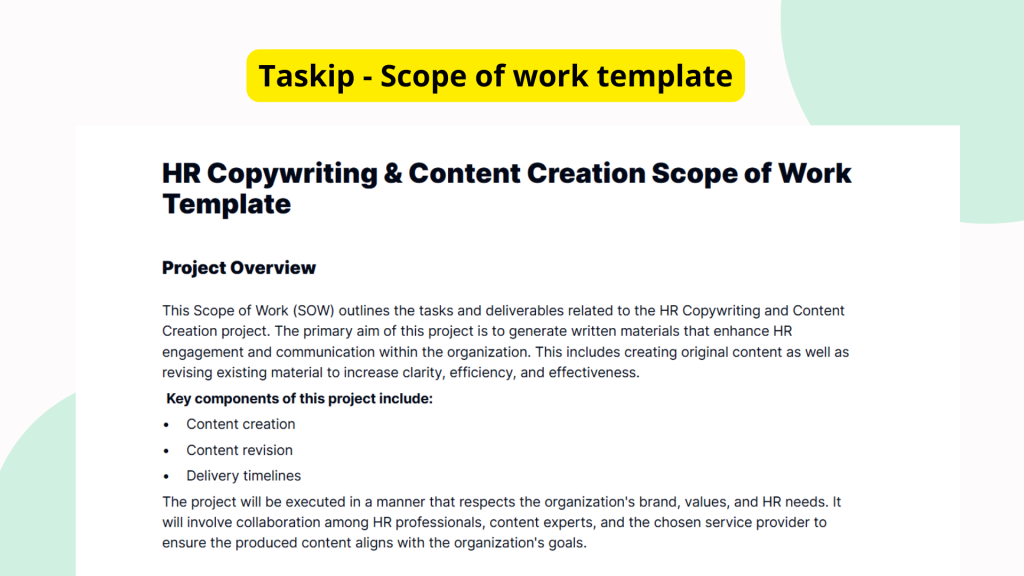
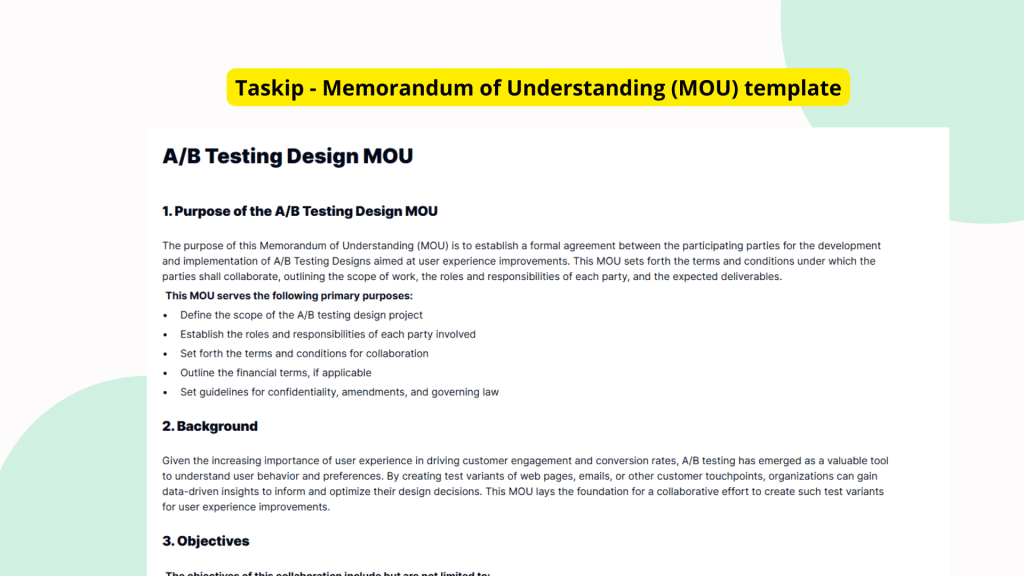
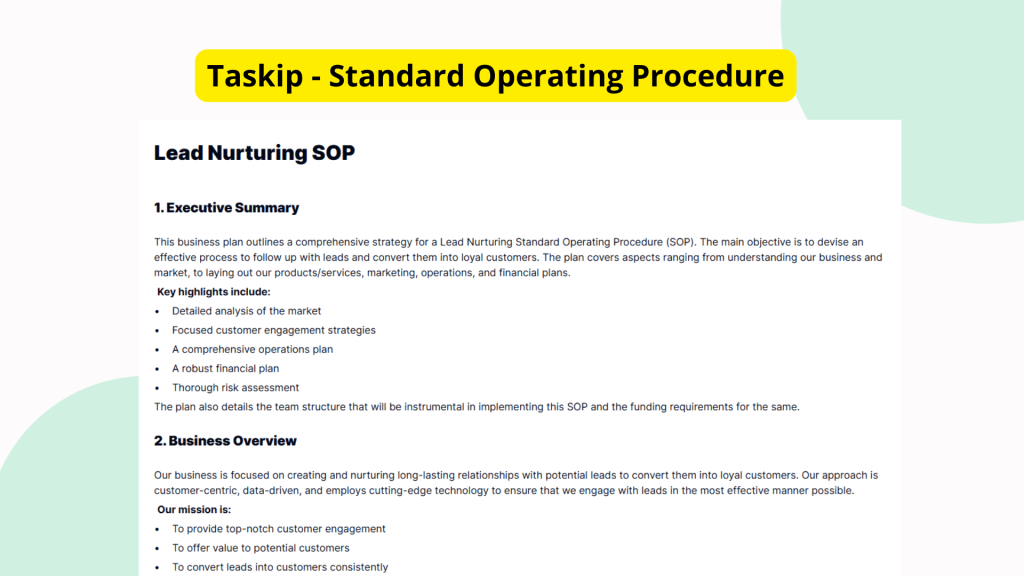
SaaS Implementation & Migration Scope of Work Template
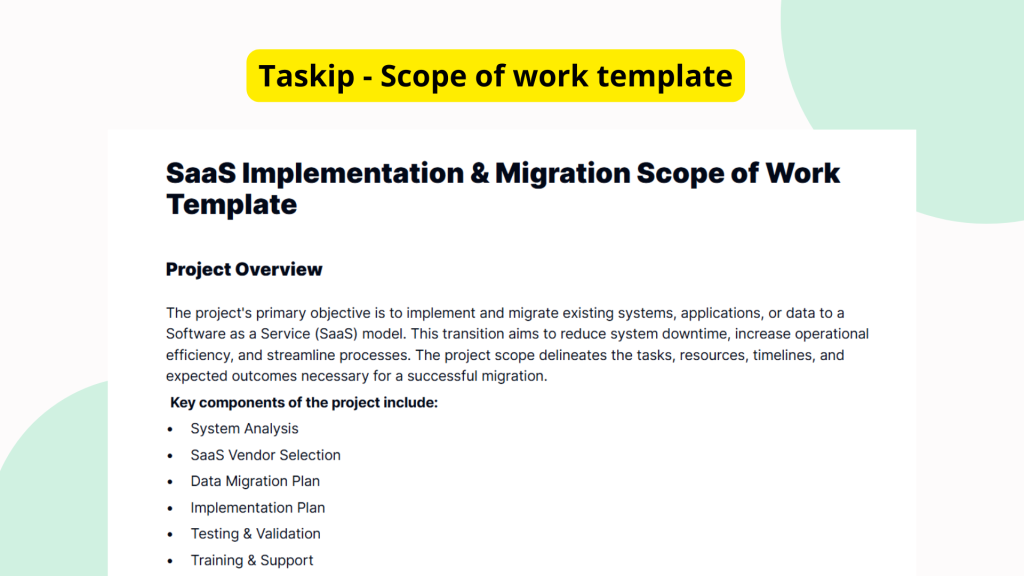
When preparing to implement or migrate to a new SaaS platform, planning thoroughly is crucial. A structured Scope of Work (SOW) document ensures all stakeholders are aligned from the very beginning. The SaaS Implementation & Migration Scope of Work Template is designed to assist teams in mapping out project responsibilities, deliverables, workflows, and timelines, all in a format that enhances clarity and execution.
What is the SaaS Implementation & Migration Scope of Work Template?
This template serves as a foundational framework created to help teams outline and manage every aspect of a SaaS implementation or migration project. By categorizing tasks, roles, deadlines, and delivery milestones, the template provides a high-level and detailed overview needed to manage complex SaaS rollouts. Its main objective is to give teams a clear starting point for operational planning, team alignment, and stakeholder communication during SaaS adoption or transitions.
Why You Should Use This SaaS Implementation & Migration Scope of Work Template
Using this template eliminates the chaos and inefficiencies that often accompany SaaS deployments. Instead of starting from scratch, project teams can leverage a structured layout that accelerates planning and ensures no critical task falls through the cracks. It promotes better project management by simplifying task distribution, tracking implementation phases, defining expectations, and reducing miscommunication. Employing a prebuilt scope of work document allows teams to focus more on execution rather than documentation logistics.
Who Should Use This Template
This template is especially valuable for project managers, IT leads, business analysts, internal implementation teams, and SaaS consultants responsible for overseeing transitions from legacy systems to cloud-based solutions. Freelancers and professionals involved in software deployment phases can also leverage this document to communicate clearly with clients and vendors. Any role tasked with structuring or guiding a SaaS implementation lifecycle benefits from this template’s clarity and organization.
What’s Inside the Template
Although the provided template content is mostly empty, the intended structure typically includes:
- Project Objectives: Clear articulation of SaaS goals and desired outcomes
- Roles & Responsibilities: Definition of team member duties and external vendor tasks
- Migration Steps: Steps involved in moving from existing systems to the SaaS platform
- Project Timeline: Milestones, deadlines, and implementation phases
- Communication Plan: How updates will be delivered and issues addressed
- Risk Mitigation: Identified risks and contingency strategies
- Acceptance Criteria: How deliverables will be reviewed and validated
With these key sections structured properly, the document facilitates seamless launches and supports informed decision-making throughout the SaaS lifecycle.
Real-Life Example of Use Case
Imagine a mid-sized marketing agency transitioning from an on-premise CRM to a specialized SaaS client management platform. The project manager uses the SaaS Implementation & Migration Scope of Work Template to map out the migration. By defining data migration steps, assigning tasks to the IT team, and scheduling client onboarding sessions, the agency ensures every technical and strategic detail is covered. The template also acts as a shared reference for management and external consultation partners, minimizing delays and misunderstandings.
Benefits of Using This Template with Taskip
Taskip’s platform enhances the value of this template by making it not just accessible, but highly functional. Users can open the template, make instant edits, assign responsibilities, and set deadlines — all within the Taskip interface. Additionally, you can share the document easily with stakeholders or get sign-off through integrated digital signature features. Taskip allows for template reuse across projects, promoting consistency, reducing rework, and accelerating team adoption.
Why This Template Stands Out
Creating a detailed SOW document from scratch can be time-consuming and prone to omissions. This template removes the guesswork by offering a ready-to-use structure that covers all crucial areas for SaaS onboarding. Unlike generic templates found online, this one is purpose-built for implementation and migration, offering specificity and adaptability for real SaaS scenarios. Its usefulness lies not in its content as it stands, but in its customizable structure that adapts to different project scopes.
How to Use This Template
- Go to the Taskip Templates section
- Click on “Use Template”
- Add or edit the template fields as needed
- Customize and send it to your client or team
Each of these steps is designed for ease-of-use, enabling teams to initiate SaaS projects faster without compromising on structure or professionalism.
Start Your SaaS Implementation & Migration Scope of Work Template Project the Right Way
Kick off your SaaS project with a foundation that sets you up for success. By using the SaaS Implementation & Migration Scope of Work Template on Taskip, you streamline coordination, clarify details, and execute faster. Avoid missteps and keep every stakeholder in sync from day one, the smart way to begin any migration or deployment.
FAQ
What is the purpose of this template?
It is intended to provide a structured format for outlining the tasks, roles, and timelines involved in SaaS implementation or migration.
Can this template be customized?
Yes, while the provided structure is mostly empty, it is meant to be adapted to fit your project’s unique needs and phases.
Who should use this template?
Project managers, implementation teams, IT consultants, and stakeholders involved in deploying or transitioning to SaaS platforms.
Does Taskip help manage the template?
Yes, Taskip allows users to edit, share, and digitally sign the template, making it a collaborative and reusable asset.
Is this template better than starting from scratch?
Absolutely, it saves time and ensures important implementation details are not overlooked during project planning.