Operations Strategy & Execution Scope of Work Template
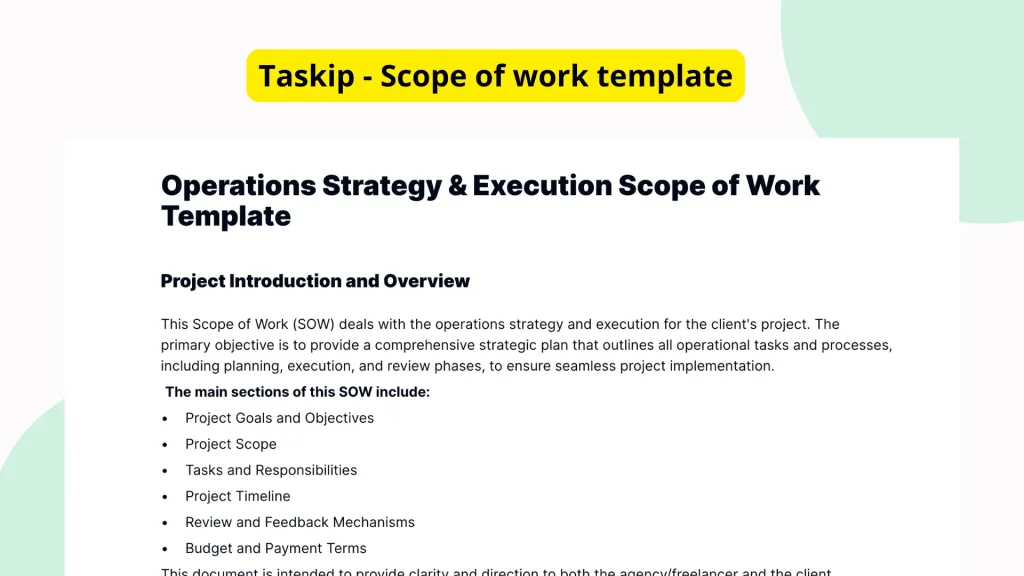
Developing and driving operational excellence is a core priority for many businesses, but aligning strategy with execution requires structured planning. The Operations Strategy & Execution Scope of Work Template provides a foundational framework to help teams begin outlining their key initiatives and plans without starting from a blank page. While the current version contains mostly empty headings and placeholders, it serves as a flexible starting point for crafting a tailored operational roadmap.
What is the Operations Strategy & Execution Scope of Work Template?
The Operations Strategy & Execution Scope of Work Template is a structured document outline intended to guide operations teams in organizing their strategic initiatives, defining execution steps, and aligning team deliverables. Although the template is currently composed of empty headings and bullet points, its primary function is to serve as a customizable framework enabling users to input core objectives, milestones, and detailed plans relevant to their operational strategy.
Why You Should Use This Operations Strategy & Execution Scope of Work Template
Using this template helps teams cut down on planning time and maintain clear alignment among stakeholders. Instead of starting from scratch, the template gives users a consistent outline to fill in based on their specific goals. This consistency helps eliminate ambiguity in planning, ensures accountability for execution, and improves transparency across departments. Even in its minimal current state, it is a valuable scaffold that simplifies initiating the strategic planning process.
Who Should Use This Template
This template benefits a wide variety of users within an organization. Key users include:
- Operations Managers: Who need to define and coordinate operational strategies
- Project Teams: That require structured scope definitions before executing work
- Internal Strategy Departments: That must align detailed plans with executive goals
- Consultants: Who assist companies with operational optimization projects
- Startup Founders: Laying foundational SOPs and execution plans
Essentially, any individual or team involved in planning and implementing operational tasks can benefit from structuring their work using this customizable outline.
What’s Inside the Template
Though the visible content of the template remains unfilled, users will see a flow of invisible headings and blank bullet points. These structural placeholders are ideal for use as customizable sections, which users can define and populate according to their specific needs. Typical layout elements likely include:
- Section headings for strategic goals
- Bullet points for execution tasks
- Placeholders for timelines and milestones
- Subsequent sections for deliverables or KPIs
- Areas to define team roles and responsibilities
This skeletal structure allows teams to build an organized and comprehensive scope of work without constructing a new format each time.
Real-Life Example of Use Case
Imagine an operations team preparing an annual strategy for scaling logistics in a growing e-commerce company. While planning, the team needs a clear document to define their goals reducing shipping time, integrating a new warehouse partner, and optimizing inventory systems. Using this template, they outline these strategic priorities as headings, define execution bullets for each, allocate owner responsibilities, and establish quarterly benchmarks. This structured approach aids in consistent tracking and communication throughout the year.
Benefits of Using This Template with Taskip
Taskip’s platform takes this blank-outline template and makes it a powerful real-time tool. With Taskip, users can:
- Quickly edit and populate the template with collaborative inputs
- Share templates across teams and departments instantly
- Collect approvals or feedback via built-in sharing tools
- Leverage reusable structures for recurring strategic projects
- E-sign completed documents if needed for internal use
Taskip transforms the basic scaffolding of the template into a dynamic, interactive planning document—enhancing usability and streamlining strategy execution.
Why This Template Stands Out
While many teams rely on generic documents or struggle with formatting inconsistencies, this template offers a focused and structured starting point for operational planning. It eliminates the need for manual setup and reduces formatting complexity. More importantly, by using a template that’s already formatted for strategic scope and execution tasks, users can stay focused on content quality and planning effectiveness instead of layout concerns.
How to Use This Template
- Go to the Taskip Templates section
- Click on “Use Template”
- Add or edit the template fields as needed
- Customize and send it to your client or team
Start Your Operations Strategy & Execution Scope of Work Template Project the Right Way
A structured plan is the first step toward operational clarity and success. With the Operations Strategy & Execution Scope of Work Template, you can align strategic outcomes with daily execution efforts effortlessly. Start your next project with the right level of organization, faster decision-making, and improved stakeholder communication using this practical and flexible tool.
FAQ
What kind of content is included in this template?
The template consists mostly of invisible headings and empty bullet lists, serving as a blank framework for outlining operations strategy and execution steps.
Is the template suitable for customized use?
Yes, the template is designed to be fully customizable users can define headings, tasks, goals, and roles according to their specific strategic plans.
What is the primary use of this template?
The main purpose is to help operations teams structure and execute their strategic initiatives through a clear, organized scaffold.
Can I collaborate with my team using this template?
Yes, when used through Taskip, this template supports collaborative editing and sharing for effective teamwork and coordination.
Is this template only useful for large businesses?
No, teams and businesses of all sizes including startups and departments within enterprises can benefit from the structured planning it enables.