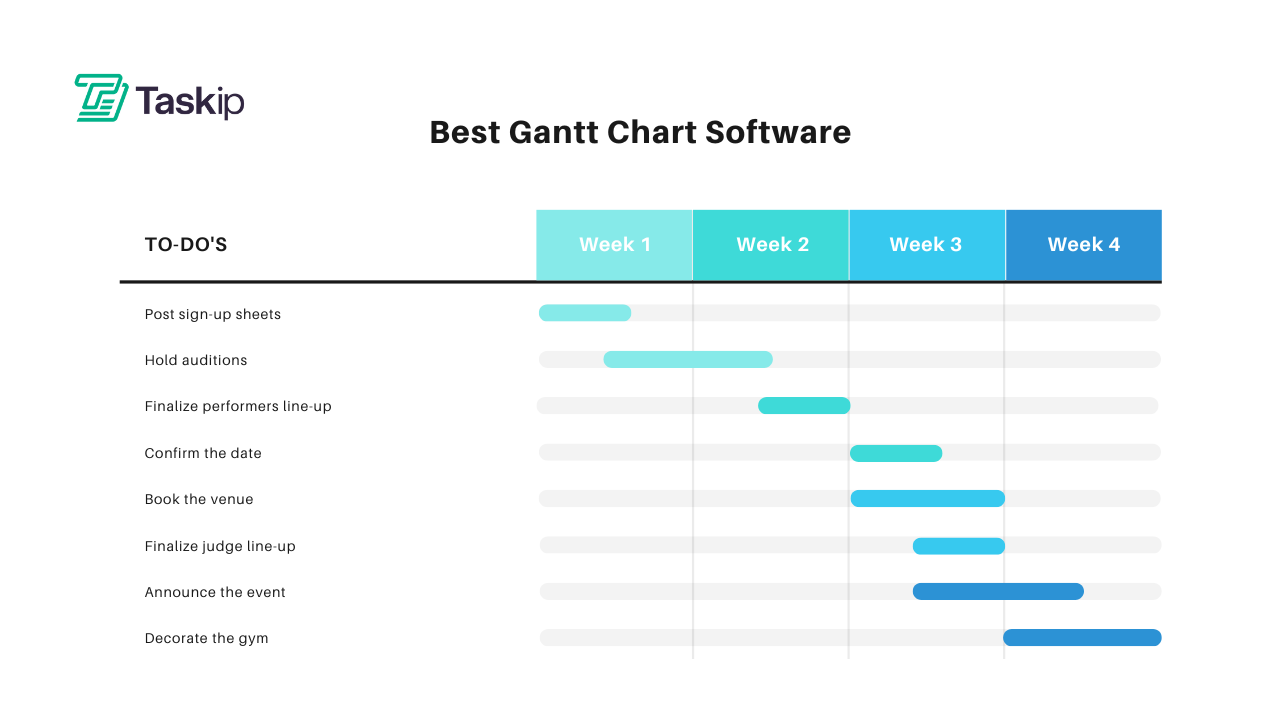
Best Gantt Chart Software for 2026: Top Picks to Boost Your Project Productivity
Struggling to visualize project timelines? Finding the best Gantt chart software can make or break your team’s productivity. In today’s fast-paced work environment, especially for teams in dynamic locations, where remote collaboration is key, the right tool ensures deadlines are met and resources are optimized. This expert guide compares top options and reveals why Taskip is the standout choice for 2026.
Whether you’re managing small agency projects or scaling enterprise workflows, Gantt charts provide a visual roadmap to track tasks, dependencies, and progress. We’ll dive into key features, comparisons, and how Taskip excels in affordability, ease of use, and real-time collaboration.
What Makes the Best Gantt Chart Software?
Choosing the best Gantt chart software involves evaluating several core criteria to ensure it fits your team’s needs. Key features include ease of use, drag-and-drop functionality for quick adjustments, integrations with tools like calendars or CRM systems, mobile support for on-the-go access, pricing options (from free tiers to premium plans), scalability for growing teams, and robust security to protect sensitive project data.
Ease of use is paramount—tools with intuitive interfaces reduce training time and boost adoption. For instance, drag-and-drop features allow users to reschedule tasks effortlessly, while real-time collaboration ensures everyone stays aligned. Integrations are crucial; seamless connections with apps like email, file storage, or accounting software streamline workflows. Mobile support enables remote teams, such as those in managing client projects across time zones, to update timelines from anywhere.
Pricing varies widely. Free tiers often provide basic Gantt views but limit advanced features, while premium plans unlock unlimited projects and analytics. Scalability matters for expanding businesses—look for software that handles everything from solo freelancers to large agencies without performance lags. Security features, like data encryption and role-based access, safeguard confidential information.
The best Gantt chart software, like Taskip, offers real-time collaboration without the steep learning curve. They excel in AI-powered dependencies, custom templates, and high uptime, making them ideal for SMBs. LSI keywords like “project timeline visualization” and “task dependency management” highlight how these features address common pain points.
Consider your team’s size and industry. For creative agencies, prioritize visual workflows; for enterprises, focus on reporting. By weighing these factors, you’ll select the best Gantt chart software that not only visualizes timelines but also drives efficiency.
Best Gantt Chart Software 2026: At-a-Glance Comparison
Get the quick lowdown on top Gantt tools for SEO sprints, content calendars, and agency workflows. This table breaks down pricing (annual where available), standout features, best-fit teams, and ratings to help you pick the winner fast.
In-Depth Reviews of the Best Gnatt Software in 2026
The best Gantt chart software excels at visualizing project timelines, dependencies, and resources, making it essential for SEO sprints, content planning, and other optimization workflows in 2026. These tools help digital marketing teams like yours manage complex task lists efficiently while integrating with platforms such as Google Workspace and Slack.
Taskip
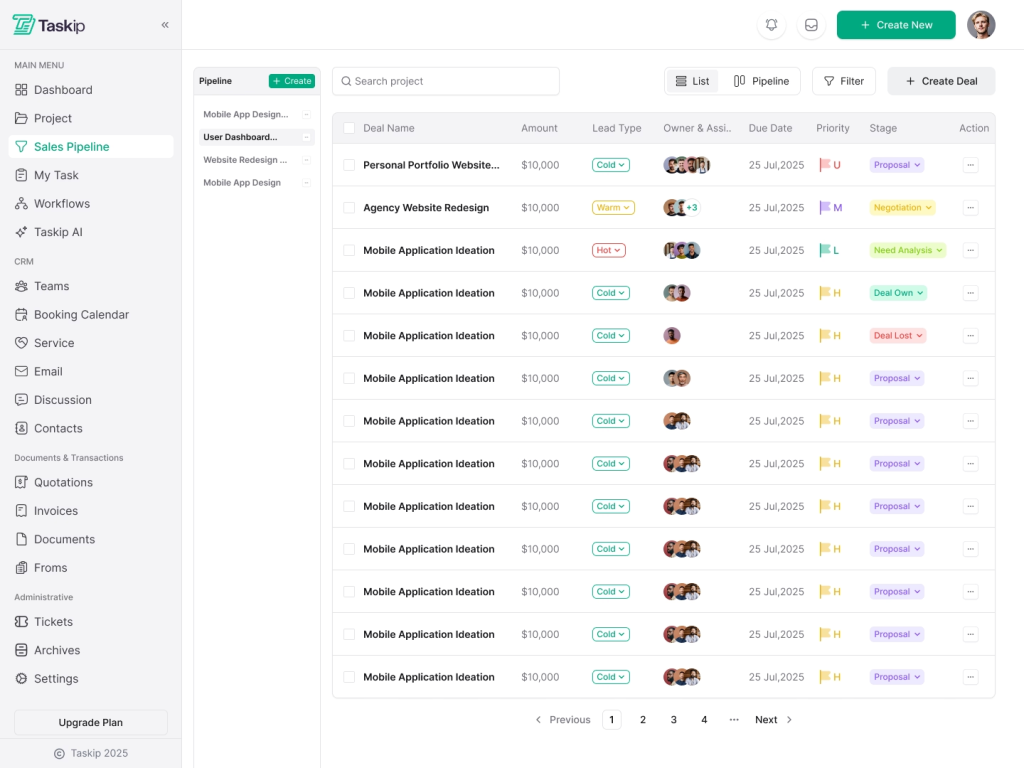
Taskip is an all-in-one client management and project management platform tailored for agencies, freelancers, and small to medium-sized businesses. It integrates CRM, project tracking, invoicing, proposals, and team collaboration into a single workspace, eliminating the need for multiple tools. With features like folder-based organization for tasks and documents, it streamlines workflows, supports sales pipelines, and enables real-time discussions. Ideal for service-based industries, Taskip emphasizes affordability and scalability, making it a go-to for teams in regions that are seeking efficient, cost-effective solutions.
Key Features:
- Folder-based task organization with hierarchies and progress tracking
- Integrated sales pipeline for tasks, events, and calls
- Invoice management with recurring options and customizable templates
- Advanced form building and document sharing
- Team management tools, including discussions and client portals
- AI-powered task dependencies and custom templates for quick setup
Pros and Cons:
| Pros | Cons |
| True all-in-one platform reducing tool fragmentation | Limited branding customization options |
| Affordable and scalable pricing with a robust free tier | Fewer specialized integrations compared to competitors |
| Strong task management for complex workflows | |
| User-friendly interface with quick onboarding | |
| Seamless client management including invoices and proposals |
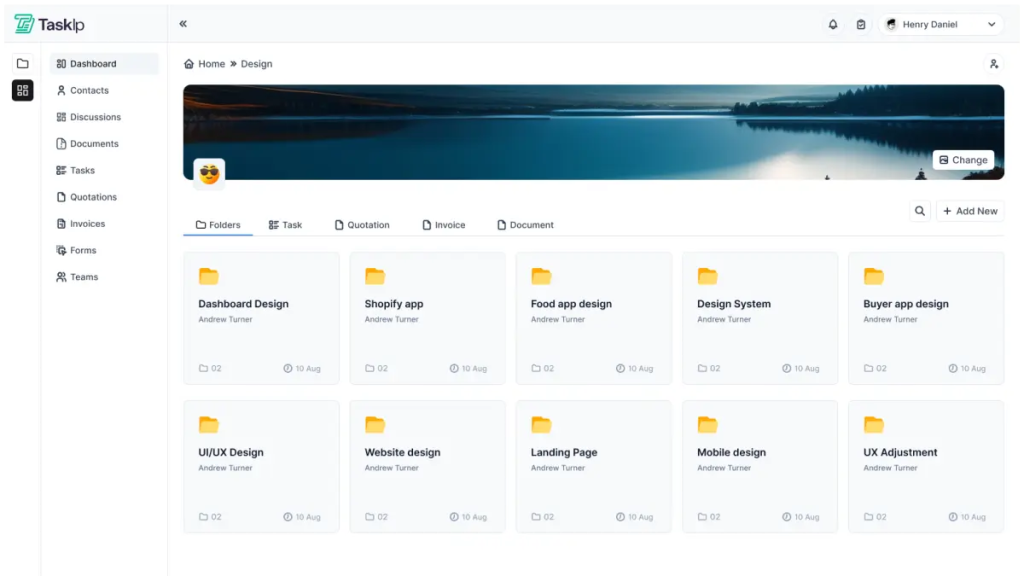
For a demo, visit taskip.net for video embeds showing real-time updates. Optimized for “Taskip Gantt chart review,” it’s the go-to for agencies seeking efficiency.
How to Get Started with Taskip
Getting started with Taskip is straightforward, making it accessible even for beginners. Follow this step-by-step guide:
- Sign up in 2 minutes: Visit taskip.net/signup and create an account with your email. Choose the free plan to test basics.
- Import your projects: Upload existing data from CSV or integrate with tools like Google Workspace for seamless transfer.
- Create your first Gantt chart: Use drag-and-drop to add tasks, set dependencies, and visualize timelines. Customize with templates.
- Invite your team: Add collaborators and assign roles for real-time edits.
- Track and adjust: Monitor progress with AI insights and adjust as needed.
Pricing breakdown:
| Tier | Price | Features |
| Free | $0 | Unlimited projects, basic Gantt views, limited storage |
| Pro | $9/user/month | AI dependencies, integrations, custom templates |
| Enterprise | Custom | Advanced reporting, unlimited everything, dedicated support |
TaskFord
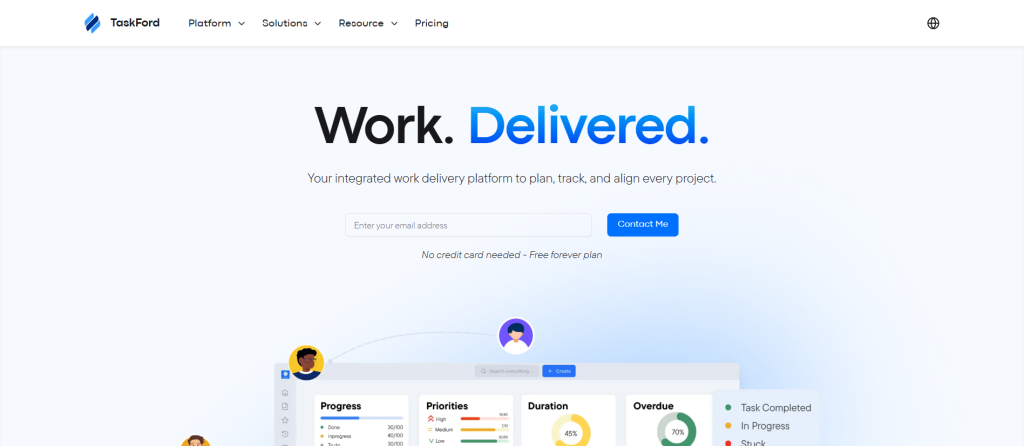
TaskFord centralizes task tracking, project timelines, workload management, and budget monitoring so teams can collaborate, visualize progress, and keep projects on time and within budget. It is designed for teams of various sizes who need portfolio-level oversight, including Gantt charts, advanced roadmaps, and capacity-based resource planning.
Key Features
- Gantt charts and timelines for scheduling and dependencies.
- Advanced roadmaps for portfolio oversight.
- Task boards to monitor workflow stages.
- Capacity and utilization tracking for resource optimization.
- Time logging for accurate project insights.
- Budget tools and cost reports to stay profitable.
- Automations like reminders and notifications.
- Integrations with external tools for seamless workflows.
Pros and Cons
| Pros | Cons |
|---|---|
| Combines work, resources, and costs in one platform—no tool hopping needed. | Early access phase means features might still evolve. |
| Full visibility into tasks, progress, capacity, and time logged. | Broad features could mean a learning curve for small teams. |
| Powerful planning with Gantt, timelines, and roadmaps. | |
| Time tracking and cost reports keep projects on budget. | |
| Boosts productivity via automations and overload prevention. |
Asana
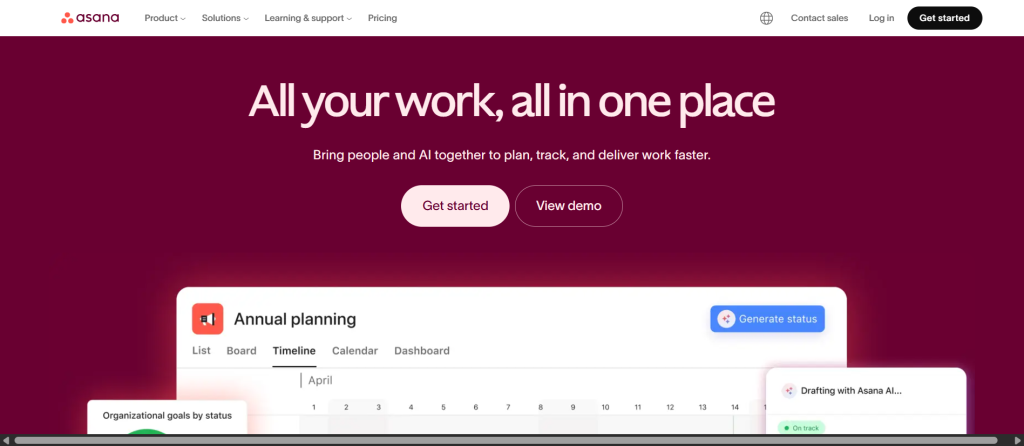
Asana is a versatile work management platform designed for teams of all sizes, offering flexible views to organize tasks and projects. Its Timeline view functions as a lightweight Gantt chart, helping users visualize timelines, dependencies, and milestones. Popular among large teams and enterprises, Asana supports automations, integrations, and real-time collaboration, making it suitable for complex workflows in marketing, product development, and remote teams. However, it requires paid plans for advanced Gantt features.
Key Features:
- Multiple views including Timeline (Gantt-like), lists, boards, and calendars
- Task dependencies and automations for workflow efficiency
- Custom dashboards for real-time project overviews
- Integrations with tools like email, calendars, and CRM systems
- AI features in higher tiers for enhanced productivity
- Reporting and goal tracking for team performance insights
Pros and Cons:
| Pros | Cons |
| Intuitive and modern interface for easy adoption | Steep learning curve for beginners |
| Robust free version with core functionalities | Pricey for small teams, with Gantt limited to paid plans |
| Versatile views for different project needs | |
| Strong automation and integration options | |
| Excellent for large teams with progress tracking |
Trello (with Gantt add-ons)
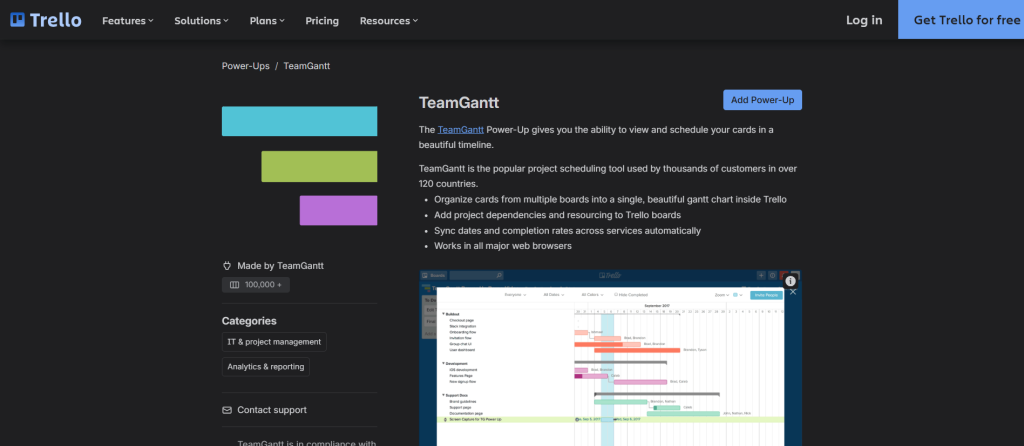
Trello is a visual Kanban-style project management tool that uses boards, lists, and cards to organize tasks. While it lacks native Gantt charts, users can add Power-Ups like TeamGantt, Planyway, or Placker to enable timeline views, dependencies, and multi-board management. It’s best for small teams or individuals handling simple, creative projects, offering affordability and ease of use, though it may require add-ons for advanced scheduling.
Key Features:
- Visual Kanban boards with drag-and-drop cards
- Power-Ups for Gantt charts, timelines, and dependencies
- Built-in automation for repetitive tasks
- Custom fields and labels for organization
- Integrations with over 200 apps
- Dashboard, timeline, and calendar views in premium plans
Pros and Cons:
| Pros | Cons |
| User-friendly and visually appealing interface | Insufficient advanced features without add-ons |
| Affordable plans with a feature-packed free tier | Scalability concerns for large or complex projects |
| Easy setup for quick project starts | |
| Strong automation and integration ecosystem | |
| Ideal for small teams with simple workflows |
Microsoft Project
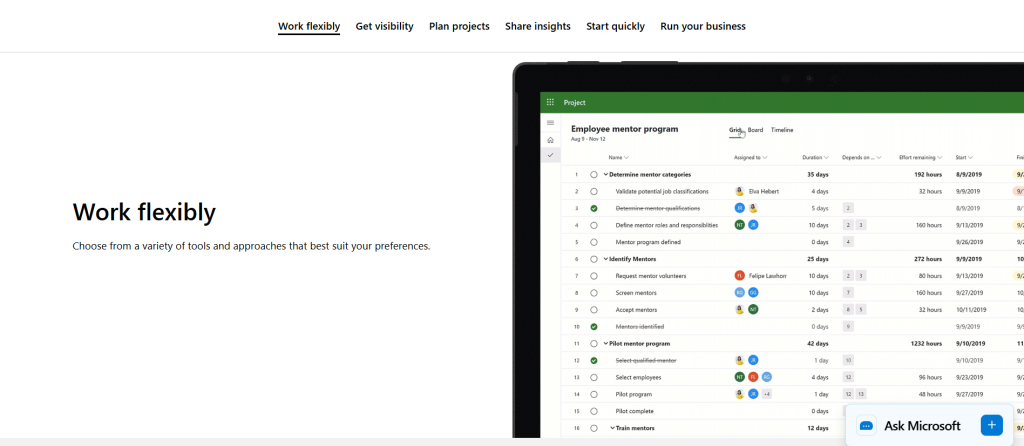
Microsoft Project is an enterprise-level project management tool renowned for its robust Gantt charts, which support detailed scheduling, resource optimization, and critical path analysis. Integrated with the Microsoft ecosystem, it’s suited for large organizations handling complex projects in construction, IT, or manufacturing. It offers multiple views and reporting, but its complexity makes it less ideal for small teams or casual users.
Key Features:
- Advanced Gantt charts with dependencies and milestones
- Resource allocation and workload management
- Critical path and baseline tracking
- Multiple views including timelines and reports
- Integration with Microsoft 365 tools
- Customizable templates and conditional formatting
Pros and Cons:
| Pros | Cons |
| Comprehensive Gantt charts for detailed planning | Complex and unforgiving user interface |
| Effective resource allocation and tracking | Expensive for small teams or single users |
| Flexible project views and reporting | |
| Strong integration with Microsoft ecosystem | |
| Supports large-scale projects with critical path analysis |
ClickUp
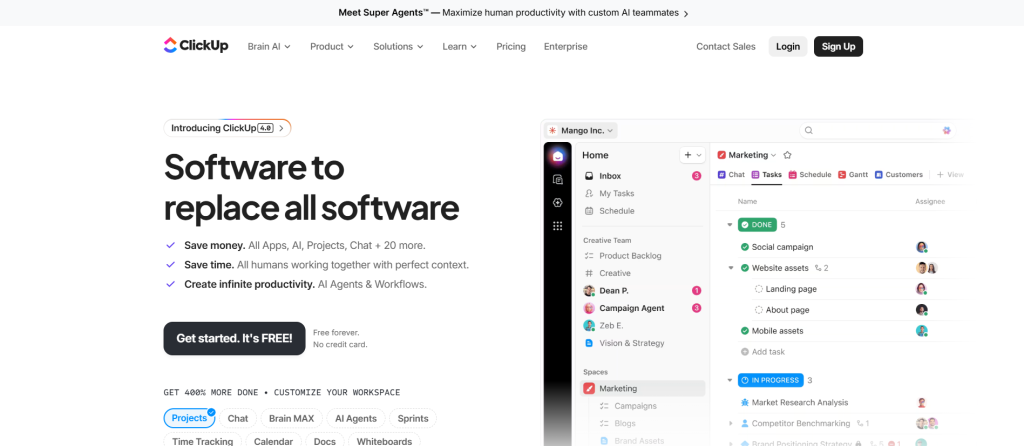
ClickUp is a highly customizable all-in-one platform that combines task management, docs, and goals with native Gantt charts for timeline visualization. It supports multiple views and is ideal for mid-sized teams needing an adaptable tool for diverse workflows. With features like automations and AI, it’s feature-rich but can overwhelm beginners due to its extensive options.
Key Features:
- Native Gantt charts with dependencies and milestones
- 15+ views including Kanban, lists, calendars, and workloads
- Custom automations and fields for tailored workflows
- Time tracking and resource management
- Whiteboards and real-time collaboration
- AI-powered insights and integrations
Pros and Cons:
| Pros | Cons |
| Highly customizable with unlimited Gantt charts | Steep learning curve due to feature overload |
| All-in-one platform for tasks, docs, and goals | Occasional performance lags in complex views |
| Affordable unlimited plan with advanced features | |
| Strong automation builder for efficiency | |
| Versatile views for any project type |
Expert Verdict: Taskip is the Best Gantt Chart Software
Expert recommends, Taskip stands out as the ultimate best Gantt chart software for 2026, blending power with simplicity. Its unique selling points include AI-powered task dependencies that automatically adjust timelines, custom templates for quick setup, and 99.9% uptime for reliable access.
Taskip’s Gantt views offer drag-and-drop editing, real-time collaboration, and seamless integrations with CRM and invoicing tools. Unlike competitors, it unifies client management with project tracking, reducing tool-switching.
Addressing objections: Is Taskip too basic? No—premium tiers add advanced reporting, Kanban boards, and unlimited storage. Try the free trial to see its depth.
Final Thoughts on The Best Gantt Chart Software
After comparing the best Gantt chart software, Taskip stands out for its balance of power and simplicity, especially for SMBs and agencies. It excels in AI features, affordability, and seamless workflows, outpacing Asana’s pricing hurdles and ClickUp’s complexity.
Start Free Trial to see how the best Gantt chart software works.
FAQ About Best Gantt Chart Software
How much does the best Gantt chart software cost?
Best Gantt chart software ranges from free to premium plans. Taskip offers a generous free tier for individuals and teams. Enterprise tools like Microsoft Project can cost up to $55/user/month.
Does Taskip integrate with other tools?
Yes, Taskip integrates with CRM, invoicing, and productivity tools. This keeps project data centralized and workflows connected. Integrations help teams save time and reduce manual work.
What features should the best Gantt chart software have?
The most important feature of best Gantt chart software is ease of use. Task dependencies and integrations are essential. Mobile access and collaboration support are also key.
How does Taskip compare to Asana for Gantt charts?
Taskip offers the best Gantt chart software features at a lower cost. There are no strict feature restrictions by pricing tier. Asana limits Gantt access to higher-priced plans.


Get Summary On: