Marketing Audit & Optimization Scope of Work Template
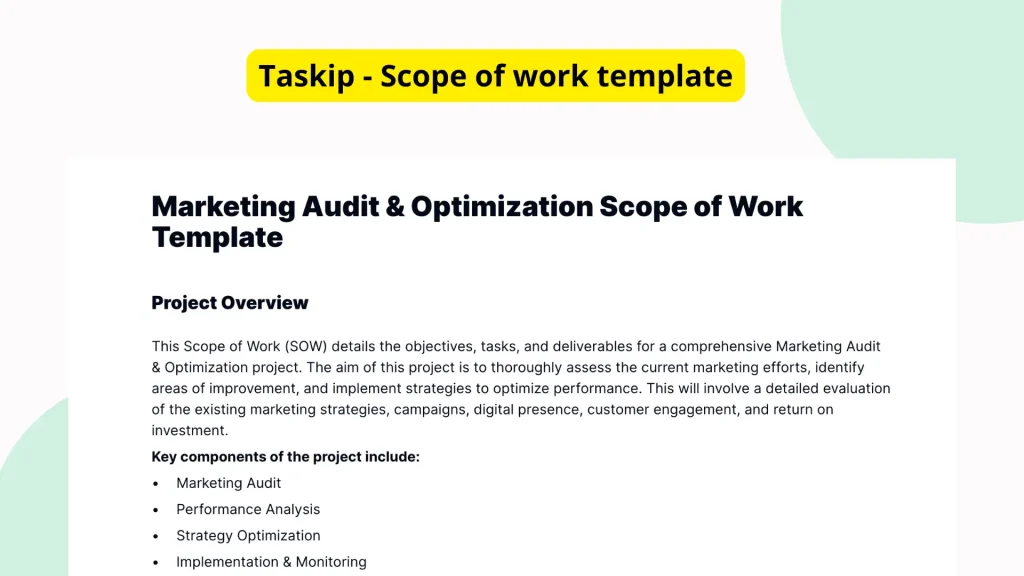
Conducting a marketing audit and implementing optimization strategies require structure, clarity, and meticulous planning. The Marketing Audit & Optimization Scope of Work Template offers a starting point to outline, organize, and document your entire audit process and optimization tasks. Even though the content is mostly blank, it provides a malleable framework you can shape to suit your unique marketing analysis goals.
What is the Marketing Audit & Optimization Scope of Work Template?
This template is a foundational tool for anyone conducting a marketing audit followed by an optimization plan. It sets up a professional structure for documenting key audit processes, optimization strategies, and overall project scope. While the template does not include pre-filled content, its layout implies sections dedicated to breaking down audit tasks and aligning them with specific optimization measures — making it easier to keep efforts aligned and results measurable.
Why You Should Use This Marketing Audit & Optimization Scope of Work Template Template
Working without a structured scope of work can lead to disorganized efforts, miscommunication, and missed deadlines. This template helps you stay on course by presenting a clear and organized framework. Although initially blank, it allows you to personalize each section — ensuring that every part of your audit and optimization project is accounted for. It reduces ramp-up time, boosts clarity in client communications, and enhances accountability.
Who Should Use This Template
This template is especially beneficial for professionals involved in marketing evaluations and strategic improvements. Ideal users include:
- Marketing Consultants – who need to perform audits and present actionable improvement plans.
- Freelancers – managing multiple client optimization projects and requiring consistent documentation.
- Internal Marketing Teams – organizing quarterly or annual audit processes.
- Project Managers – overseeing the delivery of audit results and execution of recommendations.
What’s Inside the Template
Though the content within the template is minimal and mainly placeholders, its structure signals an emphasis on key areas related to marketing audits and optimization work. Based on the heading and format layout, the template likely contains the following sections:
- Audit Processes – to outline what aspects of marketing will be evaluated (e.g., channels, performance metrics).
- Areas for Optimization – to define what improvements will be made following the audit.
- Scope of Work – to clarify deliverables, timelines, and responsible parties.
- Strategic Recommendations – for presenting findings and improvement suggestions.
- Implementation Overview – to guide how selected strategies will be rolled out.
Real-Life Example of Use Case
A marketing consultant is hired by an e-commerce client to assess the performance of their current digital marketing strategy. With no prior documentation available, the consultant uses the Marketing Audit & Optimization Scope of Work Template from Taskip to construct a customizable document. They define audit objectives, identify underperforming channels, outline areas needing optimization like SEO and email automation, and propose actionable changes within the scope section. This helps the client better understand the plan, timeline, and projected results.
Benefits of Using This Template with Taskip
Using templates within the Taskip platform significantly enhances your workflow. Taskip enables:
- Quick Customization – Fill in only the sections you need in a clean and user-friendly interface.
- Easy Sharing – Send the finalized scope to clients, team members, or stakeholders with just a few clicks.
- Collaboration – Team members can review and contribute directly within the Taskip platform.
- Reuse and Clone – Use your customized version repeatedly for future audits.
- Digital Signatures – Secure agreement by allowing clients to sign the scope of work directly.
Taskip streamlines the entire documentation process so marketers can focus more on delivery and less on logistics.
Why This Template Stands Out
Unlike starting from a blank page or using generic scope of work documents, this template is tailored at least structurally for marketing audits and optimization. Its layout anticipates your needs, which reduces setup time and improves clarity from the start. Because it’s nearly content-free, you can shape each section specifically for the project at hand without needing to strip away irrelevant predefined text.
How to Use This Template
- Go to the Taskip Templates section
- Click on “Use Template”
- Add or edit the template fields as needed
- Customize and send it to your client or team
Start Your Marketing Audit & Optimization Scope of Work Template Project the Right Way
Don’t let disorganized planning slow down your marketing audit. With this ready-to-customize template, you can begin every project with a clear structure and align every team member toward actionable optimization. Save time, improve communication, and achieve better marketing outcomes with an organized scope of work built in Taskip.
FAQ
Is this template pre-filled with marketing audit content?
No. The template structure includes headings and placeholders but does not have substantive content. It’s designed for you to fill in based on your specific audit requirements.
Can I edit all sections of this template?
Yes. The template is fully customizable, allowing you to modify or expand on any section that appears in the layout.
Who can benefit from using this template?
Anyone leading or executing marketing audits and optimization tasks—such as consultants, freelancers, project managers, and in-house teams.
How is the template structured if it’s empty?
While it contains minimal content, the included headings and list elements imply key areas like audit processes and optimization scope, providing a helpful outline to structure your document.
Why use this template on Taskip instead of a Word doc?
Taskip adds value through quick edits, sharing features, collaboration, digital signatures, and the ability to reuse templates across projects, making it more efficient than static documents.