
Best Clientjoy Alternatives for CRM, Proposals & Recurring Billing
Every business owner has a toolbox. Some tools get used every single day, while others collect dust until you realize they don’t really fit the job anymore. For many freelancers, consultants, and agencies, Clientjoy started out as that reliable multi-tool — handling CRM, proposals, contracts, and billing in one place.
But as projects grow, teams expand, and client demands get sharper, you might discover that the same tool that once kept things simple now feels limiting. Maybe it doesn’t integrate with your favorite apps, maybe the automation feels too light, or maybe you just want something that scales as fast as your business does.
The good news? In 2026, there are plenty of Clientjoy alternatives built for exactly those next steps. From sleek freelancer-focused platforms to robust all-in-one agency systems, this guide covers the 12 best options to upgrade your toolbox — starting with Taskip, our #1 pick for clarity, growth, and client satisfaction.
Key Takeaways
Clientjoy Overview
Clientjoy is a CRM and client lifecycle management tool designed for freelancers, consultants, and agencies. It combines proposals, contracts, invoicing, and recurring billing into one platform, making it easier to manage clients from lead to payment.
- Popular among freelancers, small agencies, and consultants.
- Known for simplifying proposals, contracts, and recurring billing.
- Helps reduce tool overload by combining CRM + billing + client portals.
Why Look for Alternatives
Even with its strengths, some professionals explore alternatives to Clientjoy when they want:
- More advanced project management for handling complex workflows.
- Deeper automation to reduce repetitive admin tasks.
- Stronger integrations with their existing tech stack.
- Scalable pricing models that fit both small teams and larger agencies.
- More customization in client portals and branding.
Top Clientjoy Alternatives in 2026
Here are the platforms we’ll cover in detail — each with its own strengths and ideal use cases:
- Taskip – All-in-one platform with CRM, proposals, contracts, invoicing, automation, branded client portals, and project management.
- HubSpot CRM – Enterprise-ready CRM with advanced automation and integrations.
- Zoho CRM / Zoho One – Affordable all-in-one suite with CRM, finance, and project tools.
- HoneyBook – Popular with creatives, offering proposals, contracts, and payments in one.
- Bonsai – Freelancer-focused suite with contracts, invoicing, and tax tools.
- Plutio – Affordable all-in-one toolkit for freelancers and small teams.
- Dubsado – Workflow automation platform with contracts, invoicing, and scheduling.
- SuiteDash – White-label portals with CRM, billing, and workflows.
- Accelo – Advanced operations and resource management for scaling agencies.
- Productive.io – Project management plus budgeting and profitability tracking.
- Scoro – Enterprise-style tool with deep financial and reporting features.
- Basecamp – Simple, client-friendly project and communication hub.
What Is Clientjoy?
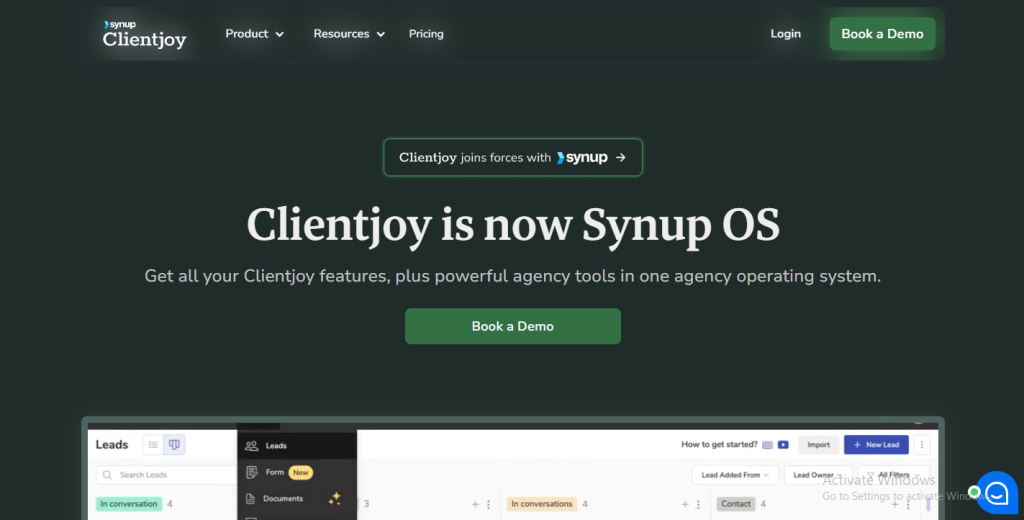
For freelancers, consultants, and agencies, managing the client journey often means bouncing between multiple tools: one for proposals, another for invoicing, a spreadsheet for tracking leads, and endless email threads for communication. Clientjoy was built as a solution to this problem — a platform designed to handle CRM, proposals, contracts, invoicing, and recurring billing all in one place.
Its goal is simple: reduce tool overload and help professionals run their business without duct-taping half a dozen apps together. By keeping everything in one hub, Clientjoy aims to free up more time for what matters most — actually serving clients.
Core Features
Clientjoy offers a range of tools designed to simplify client management:
- CRM & Pipelines – Store client information, track leads, and manage deals in visual pipelines.
- Proposals & Contracts – Create and send branded proposals, get e-signatures, and turn them into live projects.
- Invoicing & Recurring Billing – Generate invoices, set up subscription billing, and integrate with Stripe/PayPal.
- Client Portals – Share updates, invoices, and documents in a secure, client-facing space.
- Email Integration – Manage conversations and follow-ups directly inside the platform.
- Automation – Basic workflows like invoice reminders, follow-ups, and recurring billing.
Strengths of Clientjoy
- Affordable Pricing – More budget-friendly than heavyweights like HubSpot.
- All-in-One Simplicity – Combines CRM, billing, and proposals into one platform.
- Freelancer & Agency Focus – Designed with service providers in mind, not generic sales teams.
- Recurring Billing – Great for agencies running retainers or subscription services.
- Quick Setup – Easier onboarding compared to enterprise-level CRMs.
Limitations of Clientjoy
- Limited Project Management – No deep task management, Gantt charts, or workload planning.
- Basic Automation – Lacks the advanced workflow automation found in tools like Dubsado or HubSpot.
- Integration Gaps – Works with essentials like Stripe, but doesn’t have a wide ecosystem of integrations.
- Scaling Challenges – Works well for freelancers and small teams, but mid-to-large agencies often outgrow it.
- Portal Customization – Client portals are functional but less customizable than SuiteDash or Taskip.
Why People Look for Alternatives
While Clientjoy is a solid tool for freelancers and small agencies, many professionals look elsewhere when they want:
- More advanced project management to manage deliverables and teams.
- Deeper automation to save time on repetitive work.
- Broader integrations with accounting, marketing, or collaboration apps.
- Scalable pricing that fits larger agencies as they grow.
That’s why platforms like Taskip (our #1 pick), Zoho CRM, HoneyBook, and others have become strong alternatives in 2026 — offering a more tailored mix of CRM, billing, automation, and client experience tools.
Features to Look for in a Clientjoy Alternative
When you’re considering moving away from Clientjoy, the first question to ask isn’t “Which tool is the best?” but rather “Which features actually matter to my business?” Not every freelancer or agency needs enterprise-level project management, and not every tool is designed for subscription billing. By focusing on the core needs of your workflow, you can quickly narrow down the right alternatives.
Here are the key features to evaluate when comparing Clientjoy alternatives in 2026:
CRM & Client Relationship Management
At its heart, Clientjoy is a CRM tool — which means its primary job is helping you track clients, prospects, and deals. When looking for alternatives, ask:
- Can I easily capture new leads?
- Does it offer sales pipelines with clear stages (lead → proposal → contract → project)?
- Can I see the full history of conversations, proposals, and invoices for each client in one place?
Some tools, like HubSpot CRM and Zoho CRM, excel in sales-focused pipelines. Others, like Taskip, blend CRM with project tracking so you can see not just where a deal stands, but also what’s being delivered.
Proposals & Contracts
For service-based businesses, proposals and contracts are often the first real impression a client gets. Clientjoy already includes this, but if you’re switching, make sure your alternative covers:
- Customizable templates with your brand/logo.
- E-signature support for faster approvals.
- The ability to convert a signed proposal into a project or contract.
- Integrated pricing tables or scope options.
Tools like HoneyBook, Bonsai, and Dubsado shine here, while Taskip ensures proposals tie seamlessly into client portals and invoicing.
Invoicing & Billing
Billing is where Clientjoy stands out, especially with its recurring invoicing and subscription support. If you handle retainers, ongoing services, or subscription-style products, you’ll want:
- One-time and recurring invoices.
- Automated reminders for overdue payments.
- Payment gateway integrations (Stripe, PayPal, Wise, etc.).
- Multi-currency or tax support (especially if you have international clients).
- Retainer tracking (hours or credits deducted each month).
Some alternatives, like FreshBooks or Zoho Books, are stronger on invoicing/accounting, while others, like Taski,p bundle billing directly into the client experience.
Client Portals
In 2026, client experience is everything. A portal where clients can log in, see invoices, approve proposals, check progress, and communicate is no longer “nice-to-have” — it’s expected.
When evaluating alternatives, ask:
- Can clients log in to a branded, white-labeled portal?
- Are invoices, proposals, and contracts accessible in one place?
- Can clients approve or provide feedback directly inside the portal?
- Is it mobile-friendly and easy for non-technical clients?
Taskip and SuiteDash excel here, offering polished portals that put your agency’s brand front and center.
Project & Task Management
One of Clientjoy’s weaknesses is limited project management. If you want to grow, you’ll likely need:
- Task tracking (with deadlines, assignees, and priorities).
- Different project views (Kanban, Gantt, list, calendar).
- Collaboration features (comments, file sharing, discussions).
- Resource or workload planning (for teams with multiple projects).
- Time tracking for billable vs non-billable hours.
This is where tools like ClickUp, Productive.io, Teamwork, and Asana pull ahead, while Taskip integrates project tracking right alongside CRM and billing for a true all-in-one experience.
Automation & Workflows
Time is money. If your alternative doesn’t save you time, it’s not really an upgrade. Look for tools that can automate:
- Proposal → Contract → Invoice workflows.
- Reminders (invoices due, contract signature pending).
- Task creation when deals close.
- Onboarding sequences (welcome emails, forms, file requests).
Dubsado is a favorite for workflow automation, while Taskip balances automation with simplicity so smaller teams don’t feel overwhelmed.
Integrations & Ecosystem
Clientjoy integrates with essential tools, but many businesses outgrow that quickly. Alternatives should connect with your existing stack:
- Accounting (QuickBooks, Xero, Zoho Books).
- Calendars (Google Calendar, Outlook).
- Communication (Slack, Teams, Email).
- File sharing (Google Drive, Dropbox).
- Payment platforms (Stripe, PayPal, Wise).
Tools like HubSpot and Zoho offer huge ecosystems, while Taskip focuses on smart, practical integrations that directly benefit agencies.
Pricing & Scalability
One of Clientjoy’s biggest appeals is its affordable pricing. But as you grow, costs can creep up. When choosing an alternative, consider:
- Does it offer a freelancer-friendly plan?
- Are there mid-tier options for small teams?
- Is enterprise pricing available if you scale?
- Do you pay per user, per client, or flat-rate?
Basecamp is loved for flat-rate pricing, while Taskip offers flexible plans that scale with both freelancers and agencies.
Customization & Branding
Your clients should feel like they’re working with you, not just another SaaS platform. Look for alternatives that let you:
- Add your logo, domain, and brand colors.
- Customize client portals and emails.
- Create branded templates for proposals and invoices.
SuiteDash is known for deep white-labeling, but Taskip combines branding with usability so you don’t sacrifice simplicity.
Support & Community
Last but not least, no software is perfect. When things go wrong, you’ll want responsive support and a knowledge base. Good alternatives should offer:
- Live chat or fast email support.
- Onboarding help.
- Video tutorials or documentation.
- A user community or Facebook group for advice.
Taskip and HoneyBook have strong reputations for customer support, while bigger players like Zoho offer extensive documentation but less “personal touch.”
Bottom Line
When comparing Clientjoy alternatives, think about where your business is today and where it’s going. If you’re a freelancer, you might value simplicity and affordability. If you’re scaling an agency, you’ll probably need automation, project management, and deeper integrations.
That’s why many professionals turn to Taskip — it balances client portals, invoicing, proposals, and project management in one platform that grows with you.
12 Best Clientjoy Alternatives in 2026
The good news is that Clientjoy isn’t the only option for managing clients, proposals, contracts, and billing. In fact, 2026 offers a wide range of tools — some built specifically for freelancers, others designed for scaling agencies, and a few that bring everything together in one all-in-one system.
The real question is: which one fits your workflow best? If you’re a freelancer, you might want simplicity and affordability. If you’re running a growing agency, you may need deeper automation, project tracking, and financial management.
With that in mind, here are the 12 best Clientjoy alternatives in 2026 — starting with Taskip, our #1 recommendation for freelancers, consultants, and agencies who want clarity without clutter.
1. Taskip — Best All-in-One Alternative for Agencies & Freelancers
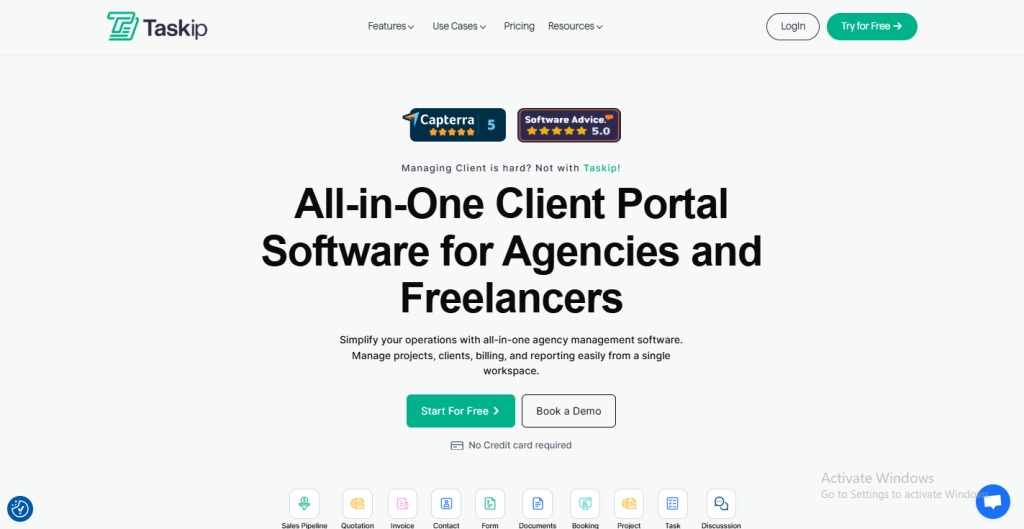
Taskip is an all-in-one platform that replaces multiple tools by combining CRM, client portals, proposals, contracts, invoicing, automation, and project management in a single workspace. Designed for freelancers, consultants, and growing agencies, it aims to eliminate tool overload while still providing scalability.
Instead of juggling a CRM, invoicing app, project management software, and client portal tool separately, Taskip brings everything into one simple system.
Core Features
- CRM & Pipelines – Manage leads, track sales stages, and store client communication.
- Proposals & Contracts – Send branded proposals with e-signature support.
- Invoicing & Recurring Billing – Handle one-time and subscription invoices with reminders.
- Client Portals – Branded, secure spaces for clients to view updates, invoices, and deliverables.
- Project & Task Management – Assign tasks, track deadlines, and collaborate with teams.
- Automation – Automate repetitive workflows like onboarding and invoice follow-ups.
- Integrations – Sync with calendars, payment platforms, and essential tools.
Strengths
- Truly All-in-One – Covers CRM, billing, contracts, portals, and projects.
- Scalable – Works for freelancers and small agencies but grows with larger teams.
- User-Friendly – Modern, intuitive interface that clients also love.
- Strong Client Experience – Branded portals make agencies look professional.
- Automation Without Overwhelm – Powerful yet easy-to-set-up workflows.
Limitations
- Still Expanding Ecosystem – Fewer integrations compared to HubSpot or Zoho.
- Not Enterprise-Focused – Built more for small-to-mid agencies than large corporations.
Why Choose Taskip Over Clientjoy?
- Taskip offers deeper project management that Clientjoy lacks.
- Its automation is stronger and more customizable.
- The client portal experience is more polished and brand-friendly.
- It balances affordability with scalability, so you don’t outgrow it quickly.
If you’re tired of juggling multiple tools or feel like Clientjoy is holding you back, Taskip is the best all-in-one alternative. It combines CRM, proposals, billing, and project management into a single streamlined platform — helping freelancers, consultants, and agencies work smarter, deliver better, and scale faster.
CTA: Looking for a tool that combines CRM, proposals, contracts, invoicing, client portals, and project management in one easy platform?
Try Taskip — the all-in-one Clientjoy alternative built for freelancers, consultants, and agencies who want to work smarter, scale faster, and impress clients.
2. HubSpot CRM — Enterprise-Level CRM With Powerful Automation
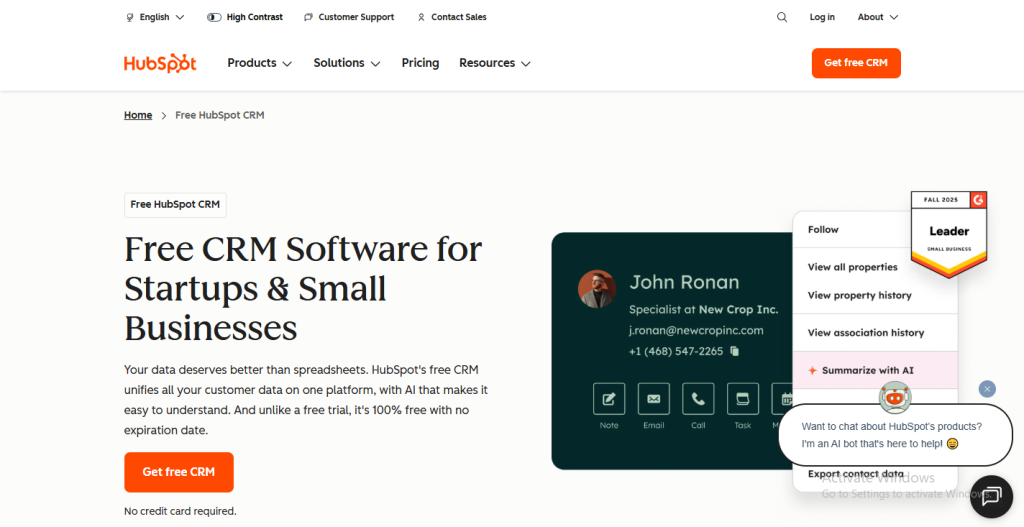
HubSpot CRM is one of the most recognized names in client relationship management. Unlike Clientjoy, which is designed specifically for freelancers and small agencies, HubSpot caters to businesses of all sizes — from solo consultants to large enterprises. It focuses heavily on sales pipelines, marketing automation, and client communication, making it ideal for agencies that want to scale.
Core Features
- Advanced CRM – Visual pipelines, lead tracking, and deal forecasting.
- Marketing Hub – Email marketing, campaigns, and landing pages.
- Sales Hub – Sales automation, quotes, e-signatures, and reporting.
- Service Hub – Client support tickets, chatbots, and customer feedback tools.
- Integrations – 1,000+ integrations with apps like Gmail, Slack, Stripe, and Zapier.
- Automation – Workflows that automate emails, follow-ups, deal stages, and client reminders.
- Analytics & Reporting – Deep dashboards for sales, marketing, and client performance.
Strengths
- Powerful CRM & Automation – Far more advanced than Clientjoy’s basic pipelines.
- All-in-One Ecosystem – Sales, marketing, and service tools under one umbrella.
- Scalability – Works for freelancers but also grows to serve large agencies.
- Integrations – Huge ecosystem of third-party apps and plugins.
- Reporting – Best-in-class analytics and dashboards.
Limitations
- Pricing – A Free plan exists, but advanced features quickly become expensive.
- Complexity – Can feel overwhelming for freelancers or very small teams.
- Learning Curve – Requires training and setup time compared to simpler tools like Clientjoy or Taskip.
Why Choose HubSpot Over Clientjoy?
- HubSpot offers enterprise-level CRM with advanced automation, making it better for agencies that need complex workflows.
- The integrations ecosystem is unmatched, meaning you can connect HubSpot with almost any tool you use.
- If data, reporting, and forecasting are priorities, HubSpot far outshines Clientjoy.
HubSpot CRM is a top Clientjoy alternative for agencies and consultants who want a scalable, automation-heavy CRM with advanced reporting and integrations. It’s not the most affordable choice, but if your priority is growth, HubSpot gives you the depth and flexibility to manage thousands of clients at scale.
3. Zoho CRM / Zoho One — Affordable All-in-One Suite
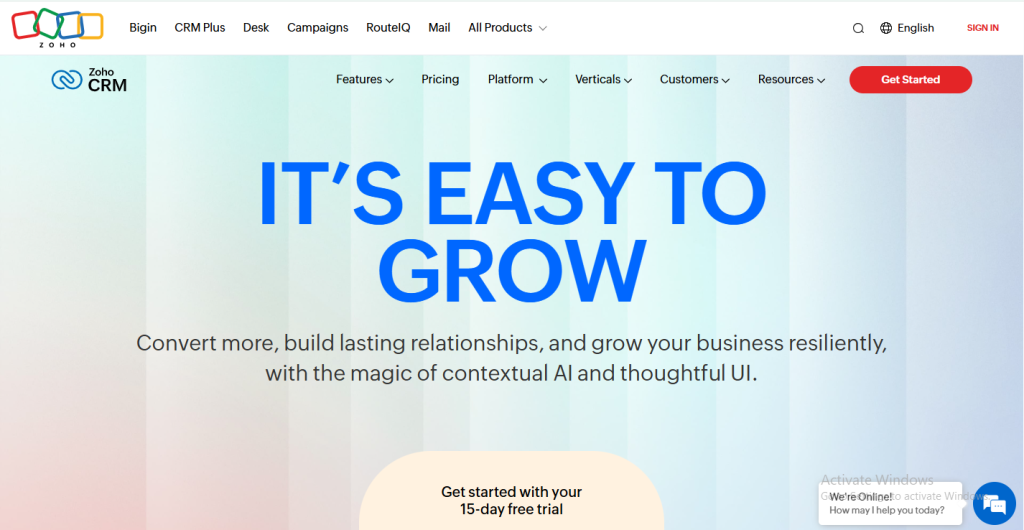
Zoho CRM is part of the larger Zoho One ecosystem, a suite of 40+ business apps covering everything from CRM and project management to accounting and email marketing. Unlike Clientjoy, which is tailored for freelancers and small agencies, Zoho positions itself as a modular system that works for businesses of any size — especially those who want affordability without sacrificing features.
Zoho CRM is at the core, helping businesses manage clients, leads, and sales pipelines. When combined with other Zoho apps like Zoho Books (accounting), Zoho Projects, and Zoho Invoice, it becomes a powerful all-in-one business management system.
Core Features
- CRM – Sales pipelines, client records, and communication history.
- Proposals & Contracts – Create quotes and proposals within CRM.
- Invoicing & Accounting – Through Zoho Invoice and Zoho Books.
- Project Management – Via Zoho Projects (task management, Gantt charts, collaboration).
- Automation – Workflow automations, triggers, and email sequences.
- Integrations – 1,000+ integrations, including G Suite, Slack, Microsoft, and payment gateways.
- Customization – Highly flexible fields, layouts, and workflows.
- AI Assistance – Zia, Zoho’s AI assistant, helps with predictions and insights.
Strengths
- Affordable Pricing – One of the most cost-effective CRM suites compared to HubSpot.
- All-in-One Suite – Covers CRM, invoicing, project management, and more under Zoho One.
- Highly Customizable – Flexible workflows, automations, and dashboards.
- Scalability – Works for freelancers, small agencies, and large businesses.
- Strong Ecosystem – Integrates smoothly with its own apps and external platforms.
Limitations
- Learning Curve – Complex setup due to so many modules and options.
- Interface – Less modern UI compared to Clientjoy or Taskip.
- Overwhelming for Small Teams – Freelancers may find it “too much” compared to simpler tools.
- Support – Community-driven, not always as responsive as premium SaaS providers.
Why Choose Zoho Over Clientjoy?
- Better scalability — Zoho grows with your agency, from 1 to 100+ users.
- More integrations — Clientjoy’s ecosystem is limited compared to Zoho’s huge library.
- All-in-one business suite — beyond CRM, Zoho covers accounting, HR, email marketing, and more.
- Automation depth — far stronger workflow automations than Clientjoy.
Zoho CRM / Zoho One is one of the best Clientjoy alternatives for businesses that want an affordable yet powerful all-in-one system. It’s flexible enough for freelancers but especially shines for small-to-mid-sized agencies that need to connect CRM, billing, projects, and marketing in one ecosystem.
4. HoneyBook — Clientflow Platform for Creatives

HoneyBook is a clientflow management platform built specifically for freelancers, consultants, and small creative businesses. It streamlines the entire client journey — from inquiries and proposals to contracts, payments, and communication.
Compared to Clientjoy, which focuses on CRM + recurring billing, HoneyBook is all about making client interactions seamless and professional. It’s especially popular among designers, photographers, event planners, and coaches who need an all-in-one platform without the enterprise complexity.
Core Features
- Proposals & Contracts – Create polished, branded proposals with built-in e-signatures.
- Invoicing & Payments – Send invoices, accept online payments, and set up recurring billing.
- Client Communication – All client messages and files stay inside the platform.
- Automation – Automate follow-ups, reminders, and onboarding tasks.
- Scheduling – Integrated calendar for client bookings and meetings.
- CRM – Track leads, inquiries, and project progress in pipelines.
- Client Portals – Give clients a branded hub for invoices, contracts, and updates.
Strengths
- Beautifully Designed – Clean, modern interface that clients find easy to use.
- All-in-One Simplicity – Combines proposals, contracts, invoicing, and communication.
- Client-Centric – Makes every step of the client journey feel smooth and professional.
- Automation – Saves time on repetitive admin tasks.
- Community Support – Popular among creatives, with lots of user groups and resources.
Limitations
- Light on Project Management – Task tracking is limited compared to ClickUp or Productive.io.
- Not Built for Large Agencies – Best for solo professionals and small teams.
- Pricing – More expensive than Clientjoy at higher tiers.
- Limited Customization – Branding is polished but not as flexible as SuiteDash or Taskip.
Why Choose HoneyBook Over Clientjoy?
- Better client experience — polished proposals, contracts, and communication.
- Automation — HoneyBook automates client follow-ups and scheduling better.
- Creative focus — Designed with freelancers, consultants, and creatives in mind.
- Smoother onboarding — A more user-friendly experience compared to Clientjoy’s CRM-heavy approach.
HoneyBook is one of the best Clientjoy alternatives for freelancers and creatives who want to simplify client management while keeping the process beautiful and professional. It may not replace advanced project management or enterprise CRM needs, but for solo consultants and small agencies, it delivers an excellent balance of proposals, contracts, invoicing, and client portals in one easy-to-use system. See more options in our HoneyBook alternatives guide.
5. Bonsai — Business Suite for Freelancers
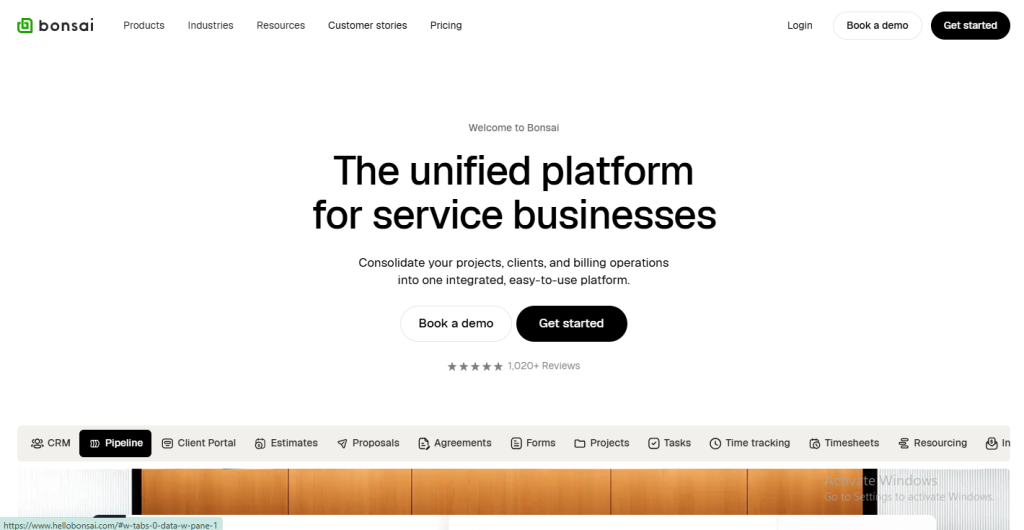
Bonsai is an all-in-one business management platform designed specifically for freelancers, solopreneurs, and consultants. While Clientjoy aims to serve both freelancers and agencies, Bonsai leans heavily toward the independent professional who wants to simplify proposals, contracts, invoicing, and even taxes.
It’s particularly popular among designers, marketers, developers, and content creators who want a tool that handles the business side of freelancing without adding unnecessary complexity.
Core Features
- Contracts & Proposals – Pre-built legal templates with e-signature support.
- Invoicing & Payments – Create invoices, set recurring billing, and accept online payments.
- Time Tracking – Log billable hours and convert them directly into invoices.
- Expense Tracking & Taxes – Manage expenses, categorize them, and prepare for tax season.
- CRM & Client Management – Store client details, proposals, and contracts in one place.
- Automation – Automate invoice reminders, recurring payments, and onboarding.
- Financial Tools – Tax reports, profit tracking, and financial dashboards.
Strengths
- Freelancer-Centric – Everything is designed with solo professionals in mind.
- Legal Templates – Ready-to-use contracts reduce legal headaches.
- Time & Expense Tracking – Goes beyond Clientjoy by helping with daily money management.
- Integrated Finance Tools – Tax prep and financial reports in one platform.
- Simple UI – Easy to navigate, no steep learning curve.
Limitations
- Not Ideal for Large Teams – Built for individuals or very small teams.
- Basic Project Management – Lacks advanced collaboration or task tracking.
- Limited Customization – Branding options are simpler than SuiteDash or Taskip.
- Pricing – Can get costly if you need multiple advanced features.
Why Choose Bonsai Over Clientjoy?
- Better financial tools — includes tax tracking and expense management.
- Freelancer-first design — tailored specifically for solo consultants and creatives.
- Simpler onboarding — easier to set up compared to Clientjoy’s CRM-heavy system.
- Contracts & templates — built-in legal support saves time and money.
Bonsai is the best Clientjoy alternative for freelancers and solopreneurs who want to manage the entire business lifecycle — from proposals to payments to taxes — in one platform. While it’s not built for scaling agencies, it gives independent professionals everything they need to stay organized, look professional, and get paid faster.
6. Plutio — Flexible All-in-One Toolkit for Freelancers & Small Teams
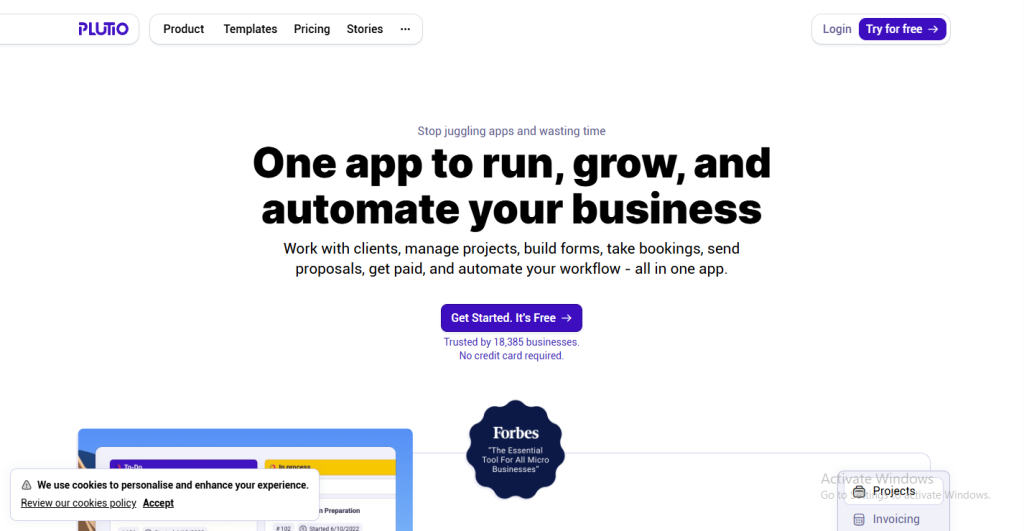
Plutio is an all-in-one business management platform designed for freelancers, solopreneurs, and small agencies. It combines CRM, proposals, contracts, invoicing, project management, and time tracking into one tool — much like Clientjoy, but with a stronger emphasis on project workflows and customization.
It’s particularly attractive to smaller teams that don’t want to pay for multiple tools like Asana, Dubsado, or FreshBooks separately.
Core Features
- CRM – Manage clients, leads, and communication history.
- Proposals & Contracts – Create customizable proposals and contracts with e-signatures.
- Invoicing & Payments – Send invoices, set recurring billing, and accept online payments.
- Project Management – Task lists, Kanban boards, calendar views, and progress tracking.
- Time Tracking – Track billable hours and link them directly to invoices.
- Client Portals – White-labeled portals where clients can view progress, invoices, and documents.
- Customization – Highly customizable dashboards, fields, and workflows.
- Collaboration Tools – Chat, file sharing, and discussions inside the platform.
Strengths
- All-in-One Design – Covers CRM, projects, billing, and communication in one space.
- Affordable – Lower pricing compared to larger platforms like HubSpot or Scoro.
- Customization – Flexible enough to adapt to unique workflows.
- Client Experience – Polished portals that make agencies and freelancers look professional.
- Global Features – Multi-language and multi-currency support for international teams.
Limitations
- Not Enterprise-Grade – Best for freelancers and small agencies, not large corporations.
- Limited Integrations – Smaller ecosystem compared to Zoho or HubSpot.
- Learning Curve – More features mean setup can feel overwhelming at first.
- Performance – Can feel slower with very large projects or databases.
Why Choose Plutio Over Clientjoy?
- Better project management — includes Kanban boards, calendars, and collaboration.
- More customization — dashboards, templates, and workflows can be tailored.
- All-in-one for small teams — replaces multiple tools at an affordable cost.
- Client portals — more polished and customizable than Clientjoy’s.
Plutio is a great Clientjoy alternative for freelancers, solopreneurs, and small agencies that want a flexible, customizable system to manage both the business and project sides of client work. It may not scale like enterprise platforms, but for independent professionals and lean teams, it’s one of the most affordable and feature-rich all-in-one options available.
7. Dubsado — Workflow Automation & Client Onboarding
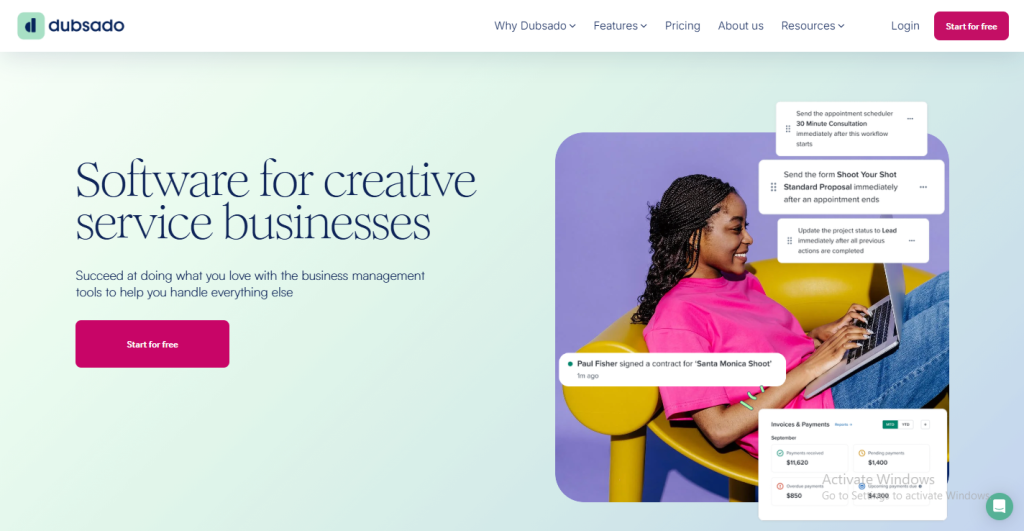
Dubsado is a business management platform designed for consultants, creatives, and service providers who want to automate the client journey. While Clientjoy offers CRM, proposals, and billing, Dubsado takes it further with workflow automation, client onboarding forms, and customized experiences.
It’s especially popular among coaches, photographers, designers, and agencies who need more than just invoicing — they want a tool that saves time on repetitive steps while giving clients a smooth, branded experience.
Core Features
- Workflows & Automation – Automate emails, forms, contracts, and reminders.
- Proposals & Contracts – Send proposals that convert directly into signed contracts.
- Invoicing & Payments – Create invoices, set recurring billing, and accept online payments.
- Client Portals – Branded spaces where clients can access all their documents and updates.
- Scheduling – Built-in booking system that syncs with calendars.
- Forms & Questionnaires – Custom intake forms for onboarding or project discovery.
- CRM – Store client details, communication logs, and deal stages.
- Reporting – Track income, expenses, and project status.
Strengths
- Powerful Automation – Saves hours by handling repetitive admin automatically.
- Custom Client Experience – Tailored portals, forms, and proposals.
- Strong for Service Businesses – Perfect for consultants and creatives.
- All-in-One – Covers CRM, billing, contracts, and scheduling.
- Client Onboarding – Intake forms and automated workflows simplify setup.
Limitations
- Learning Curve – Setup can be complex due to powerful automations.
- Basic Project Management – Task tracking is limited compared to Plutio or ClickUp.
- Overkill for Simple Needs – Freelancers who just want invoicing may find it too much.
- UI/UX – Less modern compared to HoneyBook or Taskip.
Why Choose Dubsado Over Clientjoy?
- Automation depth — far beyond Clientjoy’s basic reminders.
- Onboarding workflows — intake forms and scheduling built in.
- Custom branding — portals, forms, and contracts feel more polished.
- Better for consultants — if your business depends on smooth client journeys.
Dubsado is one of the best Clientjoy alternatives for consultants, coaches, and creatives who want to automate their workflows and reduce manual admin. While it may not replace advanced project management tools, it excels at making the client journey professional, automated, and efficient — freeing up time to focus on actual client work.
8. SuiteDash — White-Label CRM & Client Portal Platform
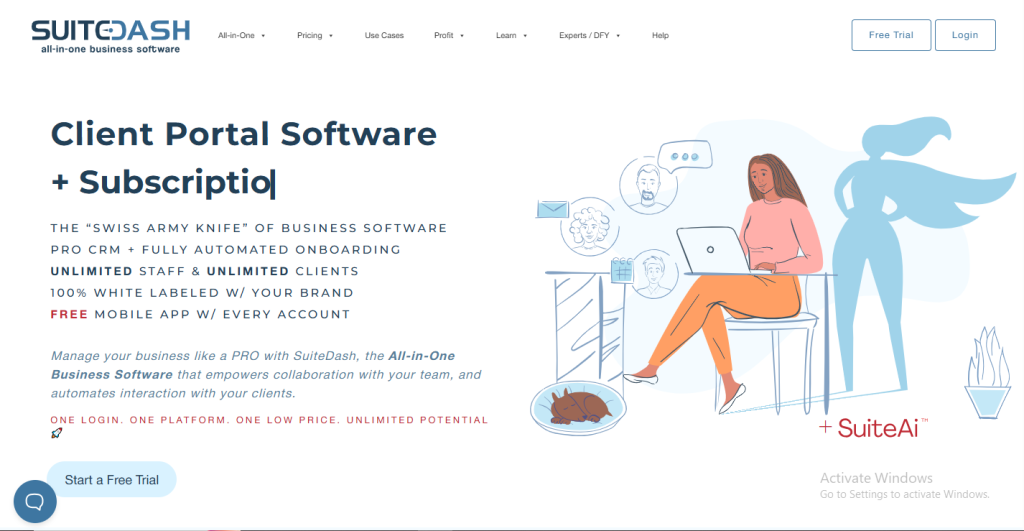
SuiteDash is a fully white-label business management platform designed for agencies and service providers who want to give clients a seamless, branded experience. Unlike Clientjoy, which offers built-in CRM, proposals, and billing, SuiteDash takes customization to the next level — letting agencies run the platform under their own domain, logo, and brand identity.
It’s especially popular with agencies that want to centralize client communication, portals, invoicing, and project management under one roof without showing they’re using a third-party tool.
Core Features
- CRM & Pipelines – Track leads, manage sales stages, and store client data.
- Client Portals – Fully branded, white-labeled portals with secure logins.
- Proposals & Contracts – Create professional proposals, get e-signatures, and convert them into projects.
- Invoicing & Payments – Generate invoices, handle subscriptions, and accept payments online.
- Project Management – Task tracking, file sharing, and collaboration tools.
- Automation – Build custom workflows to streamline onboarding, reminders, and project updates.
- LMS (Learning Management System) – Deliver training or client resources through courses.
- Customization – Add your own logo, domain, and brand elements across the platform.
Strengths
- White-Labeling – Unlike Clientjoy, SuiteDash feels like your own software.
- All-in-One – Covers CRM, projects, billing, and portals in one place.
- Affordable Pricing – Flat pricing, not per user, making it cost-effective for teams.
- Automation & Workflows – Custom automations save time on repetitive work.
- Client Experience – Portals are polished and secure, enhancing professionalism.
- Scalability – Works for freelancers, small teams, and growing agencies.
Limitations
- Steep Learning Curve – Feature-rich system can be overwhelming at first.
- UI/UX – Less modern compared to HoneyBook or Taskip.
- Setup Time – White-labeling and customization take effort.
- Support – Documentation-heavy; personalized support may feel limited.
Why Choose SuiteDash Over Clientjoy?
- Deeper customization — Clientjoy offers portals, but SuiteDash lets you fully white-label everything.
- Stronger project tools — task tracking, collaboration, and file management are more advanced.
- Flat pricing — affordable for growing teams compared to per-seat pricing.
- All-in-one design — fewer integrations needed since everything is built-in.
SuiteDash is the best Clientjoy alternative for agencies and consultants who care about branding and white-labeling. While it takes more setup than simpler tools, it delivers a truly all-in-one system where you can manage CRM, projects, proposals, billing, and client portals — all under your own brand. For businesses that want to look bigger and more polished without showing the tools behind the curtain, SuiteDash is a strong choice.
9. Accelo — Advanced Operations & Resource Management for Agencies
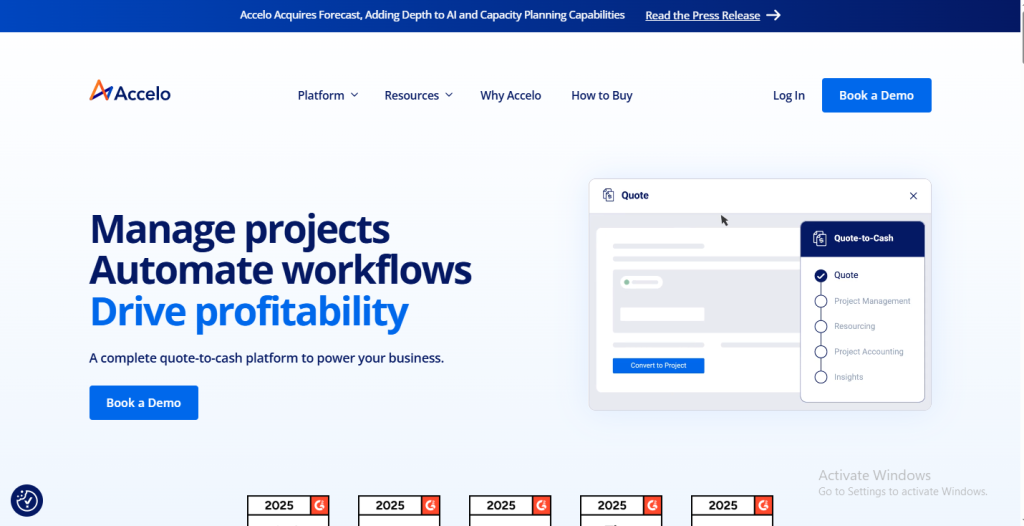
Accelo is a professional services automation (PSA) platform designed for agencies, consultancies, and service businesses that need to manage projects, clients, billing, and resources at scale. While Clientjoy is excellent for freelancers and small agencies, Accelo is built for larger teams that require deep project tracking, resource allocation, and profitability reporting.
It’s often compared to enterprise tools like Scoro and Productive.io, but it stands out for its balance of automation, project management, and financial insights.
Core Features
- CRM – Track leads, sales opportunities, and client records.
- Project Management – Gantt charts, milestones, task dependencies, and project templates.
- Resource & Workload Management – Assign resources, balance workloads, and forecast utilization.
- Time Tracking – Log hours directly against projects and tasks.
- Invoicing & Billing – Automate invoices based on billable hours, retainers, or milestones.
- Automation – Workflow triggers for projects, tasks, and billing.
- Reporting & Analytics – Profitability reports, client profitability analysis, and financial dashboards.
- Integrations – Connects with accounting (Xero, QuickBooks), email, and calendars.
Strengths
- Operations Depth – Goes beyond CRM and billing into full agency operations.
- Resource Management – Helps agencies allocate staff efficiently.
- Profitability Tracking – Insights into which projects and clients generate the most revenue.
- Scalability – Built for small-to-large agencies handling complex workflows.
- Automation – Reduces admin by automating tasks, reminders, and billing.
Limitations
- Complexity – Much heavier learning curve than Clientjoy or Taskip.
- Pricing – More expensive than freelancer-focused tools like Bonsai or HoneyBook.
- Overkill for Small Teams – Best for agencies with 10+ people.
- UI/UX – Functional, but not as sleek or modern as simpler tools.
Why Choose Accelo Over Clientjoy?
- Full operations management — Clientjoy handles CRM and billing, but Accelo also manages resources, projects, and profitability.
- Scalable for larger agencies — ideal if your business is outgrowing small-business tools.
- Deeper reporting & insights — financial dashboards reveal client and project profitability.
- Automation at scale — helps mid-to-large agencies cut admin overhead.
Accelo is one of the best Clientjoy alternatives for mid-sized to large agencies that need advanced project management, resource allocation, and profitability tracking. It’s not as lightweight or affordable as Clientjoy, but if your agency is scaling and you need to manage operations end-to-end, Accelo provides the power and visibility to run efficiently and profitably.
10. Productive.io — Project & Financial Management for Agencies
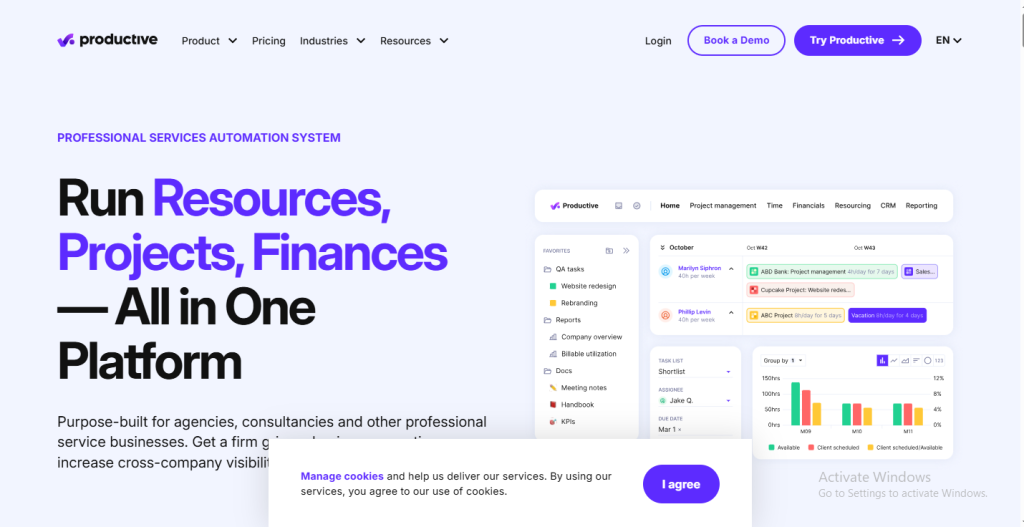
Productive.io is an end-to-end agency management platform designed for small-to-mid-sized agencies that want both project management and financial control in one place. Unlike Clientjoy, which is more CRM and billing-focused, Productive.io puts equal emphasis on project delivery and profitability tracking — making it a favorite among agencies that need visibility into how work affects revenue.
It combines task management, time tracking, resource planning, and invoicing into a single hub, helping teams work more efficiently while keeping an eye on margins.
Core Features
- Project Management – Kanban boards, Gantt charts, task lists, and progress tracking.
- Resource Planning – Assign team members, manage workloads, and forecast capacity.
- Time Tracking – Log billable and non-billable hours.
- CRM – Manage leads, pipelines, and sales opportunities.
- Invoicing & Billing – Generate invoices from tracked time, projects, or retainers.
- Profitability Tracking – Real-time insights into project costs, budgets, and margins.
- Reporting & Analytics – Custom dashboards for revenue, utilization, and performance.
- Integrations – Connect with accounting tools, Slack, and calendars.
Strengths
- All-in-One for Agencies – Combines CRM, project management, and billing.
- Profitability Insights – Real-time data on project margins sets it apart from Clientjoy.
- Scalable – Built for agencies of 10–200 people, not just freelancers.
- Strong Resource Planning – Better workload and staffing management than Clientjoy.
- Clean Interface – Modern and user-friendly compared to enterprise-heavy tools.
Limitations
- Pricing – More expensive than freelancer-focused tools like Bonsai or HoneyBook.
- Complexity – Overkill for solo professionals or very small teams.
- Learning Curve – Requires setup time to use advanced reporting and planning.
- Not as lightweight – Less freelancer-friendly compared to Clientjoy or Taskip.
Why Choose Productive.io Over Clientjoy?
- Deeper project management — Clientjoy lacks robust task and project tracking.
- Profitability focus — Productive.io shows which clients and projects make (or lose) money.
- Resource planning — Helps agencies balance workloads and maximize utilization.
- Better suited for growing teams — Clientjoy works for freelancers and small agencies, while Productive.io is ideal for 10+ person teams.
Productive.io is one of the best Clientjoy alternatives for agencies that want financial visibility alongside project management. While it may not be the cheapest option, it pays off by giving agencies real-time insights into profitability, resource use, and project success — something Clientjoy doesn’t provide.
11. Scoro — Enterprise-Level CRM, Finance & Project Management
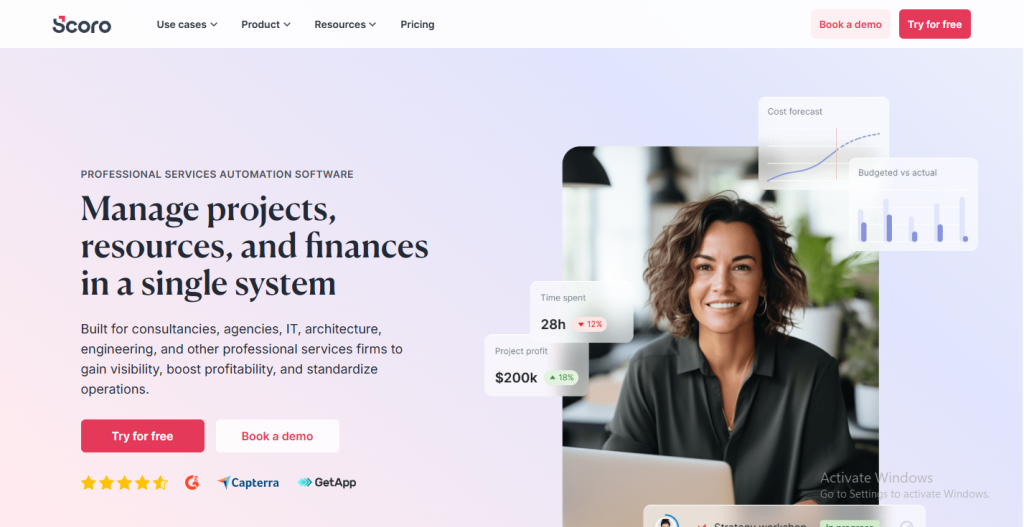
Scoro is a work management software built for agencies, consultancies, and professional service firms that need a single system to manage CRM, projects, billing, reporting, and resource planning. Compared to Clientjoy, which focuses on small-to-mid-sized businesses, Scoro is positioned as a higher-end solution for companies that want full operational visibility.
It’s especially popular among creative agencies, IT consultancies, and professional service providers who want to manage not only client relationships but also budgets, profitability, and enterprise workflows.
Core Features
- CRM & Sales – Manage pipelines, track deals, and monitor client relationships.
- Project Management – Task management, timelines, dependencies, and collaboration tools.
- Resource Planning – Allocate team resources, forecast utilization, and prevent overbooking.
- Time Tracking – Log hours and connect them directly to billing.
- Financial Management – Budgets, quotes, and expense tracking with invoicing support.
- Billing & Invoicing – Automate recurring invoices and payment reminders.
- Reporting & Dashboards – Real-time KPIs, profitability insights, and financial forecasts.
- Integrations – Works with QuickBooks, Xero, Slack, calendars, and more.
Strengths
- Truly All-in-One – Combines CRM, projects, finance, and reporting in one place.
- Financial Depth – Goes beyond Clientjoy with budget management and profitability tracking.
- Enterprise-Ready – Built for scaling agencies and consultancies.
- Custom Dashboards – Advanced reporting tailored to business needs.
- Resource Allocation – Stronger than most other alternatives for team utilization.
Limitations
- Expensive – Pricing is higher compared to Clientjoy or Taskip.
- Complexity – Requires onboarding and training to get the most out of it.
- Overkill for Small Teams – Best suited for mid-to-large agencies, not freelancers.
- Learning Curve – Advanced features take time to set up effectively.
Why Choose Scoro Over Clientjoy?
- Deeper financial tools — budgets, profitability reports, and expense tracking.
- Enterprise-grade scalability — better suited for agencies with 20+ staff.
- Advanced reporting — real-time KPIs and financial dashboards.
- All-in-one solution — Scoro can replace multiple tools at once.
Scoro is one of the best Clientjoy alternatives for agencies and professional service firms that want an enterprise-style platform. It goes far beyond CRM and billing, offering powerful financial insights, resource management, and reporting that help businesses scale with confidence. While it may be too complex (and costly) for small teams, for mid-to-large agencies, Scoro is a true all-in-one solution.
12. Basecamp — Simple Project & Client Communication Hub
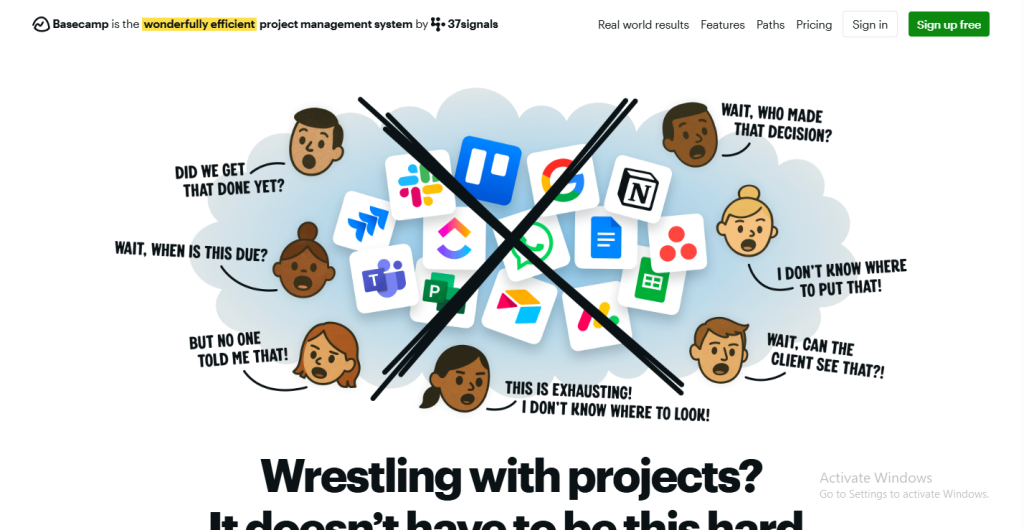
Basecamp is a project management and team communication tool that’s been trusted by agencies, creative studios, and service providers for over 20 years. Unlike Clientjoy, which focuses heavily on CRM, proposals, and billing, Basecamp takes a communication-first approach — providing a simple hub where teams and clients can collaborate without the chaos of scattered emails, chats, and task lists.
It’s especially popular among agencies that value simplicity over complexity and want an easy, client-friendly way to manage projects and communication.
Core Features
- To-Do Lists – Assign and track tasks with due dates.
- Message Boards – Centralized discussions for projects and teams.
- Schedules – Calendar views for deadlines and milestones.
- Docs & File Storage – Upload, share, and organize project documents.
- Campfire Chat – Built-in group chat for quick communication.
- Automatic Check-Ins – Replace status meetings with recurring questions.
- Client Access – Invite clients to collaborate directly in a simplified environment.
- All-in-One Dashboard – Overview of all projects in one place.
Strengths
- Simplicity – Clean, clutter-free design that teams adopt quickly.
- Client-Friendly – Clients can access projects without confusion.
- Flat-Rate Pricing – One monthly fee for unlimited users, great for agencies.
- All-in-One Collaboration – Combines chat, docs, and tasks in one hub.
- Trusted & Reliable – A long-standing tool with a strong track record.
Limitations
- No Native Billing – Unlike Clientjoy, Basecamp doesn’t handle invoicing or payments.
- Basic Project Features – No Gantt charts, workload management, or advanced reporting.
- Limited Automation – Lacks the workflow automations of tools like Dubsado or Taskip.
- Not All-in-One – Great for communication, but not for CRM or finance.
Why Choose Basecamp Over Clientjoy?
- Simplicity — Perfect for teams that don’t want heavy software.
- Flat pricing — More cost-effective for larger teams.
- Client collaboration — Brings clients directly into the project workspace.
- Trusted brand — Well-established, with decades of agency adoption.
Basecamp is a great Clientjoy alternative for agencies that want a simple, client-friendly hub for communication and projects. It won’t replace CRM, billing, or contracts, but it does an excellent job of reducing scattered emails and creating a central place for collaboration. For teams that want an easy, distraction-free tool, Basecamp is a solid choice.
Clientjoy has been a popular choice for freelancers, consultants, and agencies that want to simplify proposals, contracts, invoicing, and client management. But as businesses grow, so do their needs — from deeper project management and advanced automations to better integrations and scalable pricing.
Conclusion
The good news? In 2026, there are plenty of Clientjoy alternatives to choose from. Tools like HoneyBook, Bonsai, and Plutio are perfect for freelancers and creatives who value simplicity. Platforms like Accelo, Productive.io, and Scoro deliver enterprise-level features for scaling agencies. And if you want an all-in-one balance of CRM, proposals, billing, automation, and branded client portals, Taskip is our #1 recommended alternative.
The right tool isn’t about replacing Clientjoy — it’s about finding the system that fits how you work today while preparing for how you’ll grow tomorrow.
Ready to move beyond Clientjoy?
With Taskip, you don’t just get CRM and billing — you get a complete client management and agency growth platform. From proposals and contracts to automation and branded portals, Taskip helps you deliver better client experiences while saving time.
FAQs
What is the best alternative to Clientjoy for freelancers?
Bonsai and HoneyBook are top picks for freelancers. They simplify proposals, contracts, invoicing, and even tax tracking, making them ideal for solo professionals.
Which Clientjoy competitor is best for agencies?
For growing agencies, Taskip is the best all-in-one solution. If you need advanced financials and resource planning, Productive.io, Accelo, or Scoro are also strong choices.
Can Taskip replace Clientjoy completely?
Yes. Taskip covers everything Clientjoy does — CRM, proposals, contracts, invoicing, and client portals — and adds stronger project management and automation, making it a complete upgrade.
Which alternative offers the best client portal experience?
Taskip and SuiteDash stand out for polished, branded client portals. These platforms let you give clients a professional, white-labeled hub for updates, documents, and billing.
What’s the most affordable Clientjoy alternative?
Plutio and Zoho CRM/Zoho One are among the most affordable options. They provide powerful features at lower price points compared to HubSpot or Scoro.




Get Summary On: