

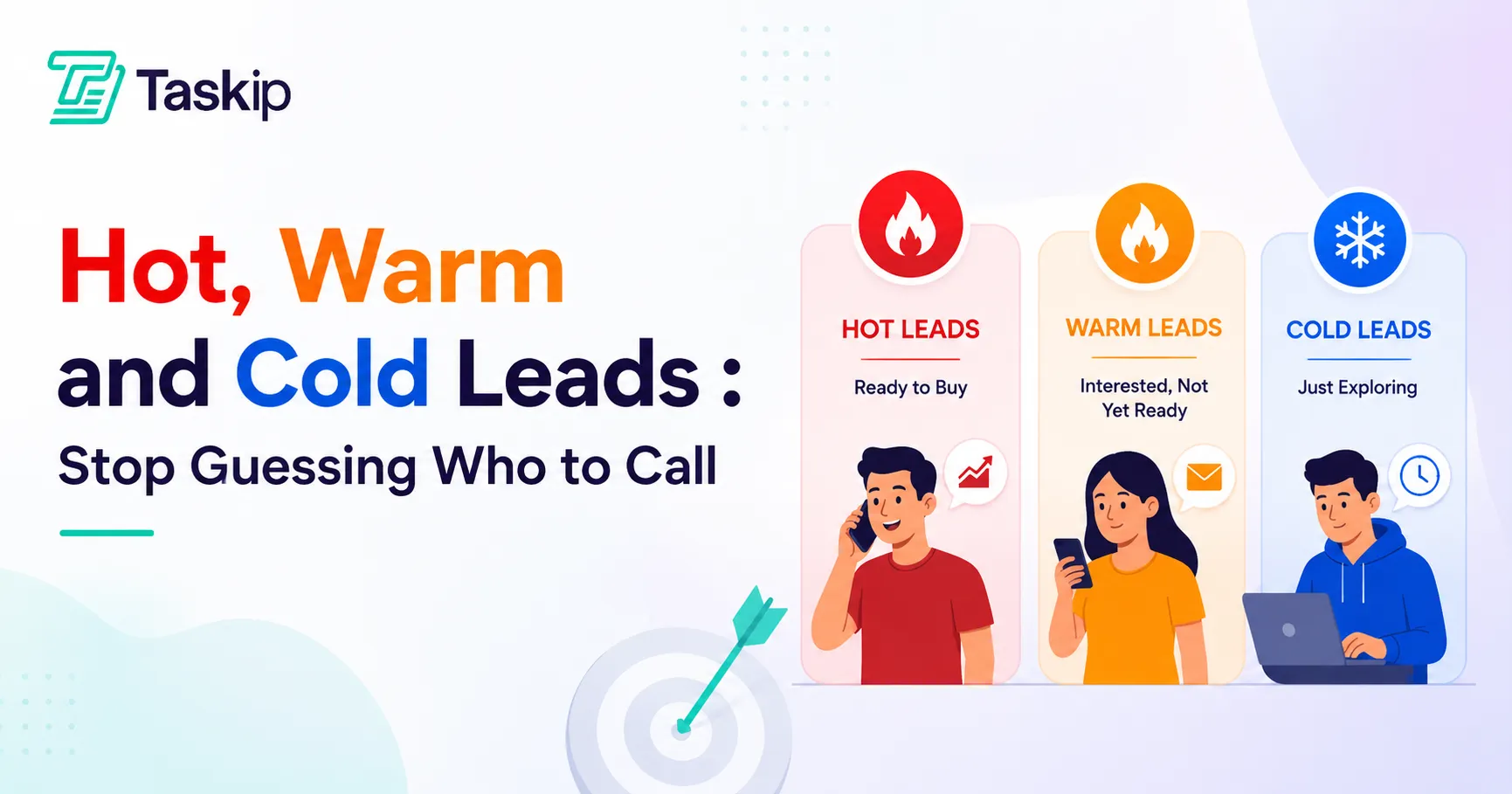
Not every lead is worth the same five minutes. A hot lead is ready to sign this week; a cold one hasn’t replied in a month. Warm sits somewhere in between, interested, but in no rush. Lead scoring is just a way to tell the three apart fast, so you know who to call first instead of guessing.
In this guide we will learn about hot, warm, and cold leads and how to prioritize them:
| Lead | Action |
|---|---|
| Hot | Recent contact + budget + decision-maker → Follow up today |
| Warm | 1–2 signals → Regular follow-up |
| Cold | No recent response → Automated nurture |
| Scoring | Check recency + budget + decision-maker |
| Failure | Score set once or kept in someone’s head |
| Fix | Update temperature throughout the pipeline |
Table of Contents
What Do Hot, Warm, and Cold Leads Mean?
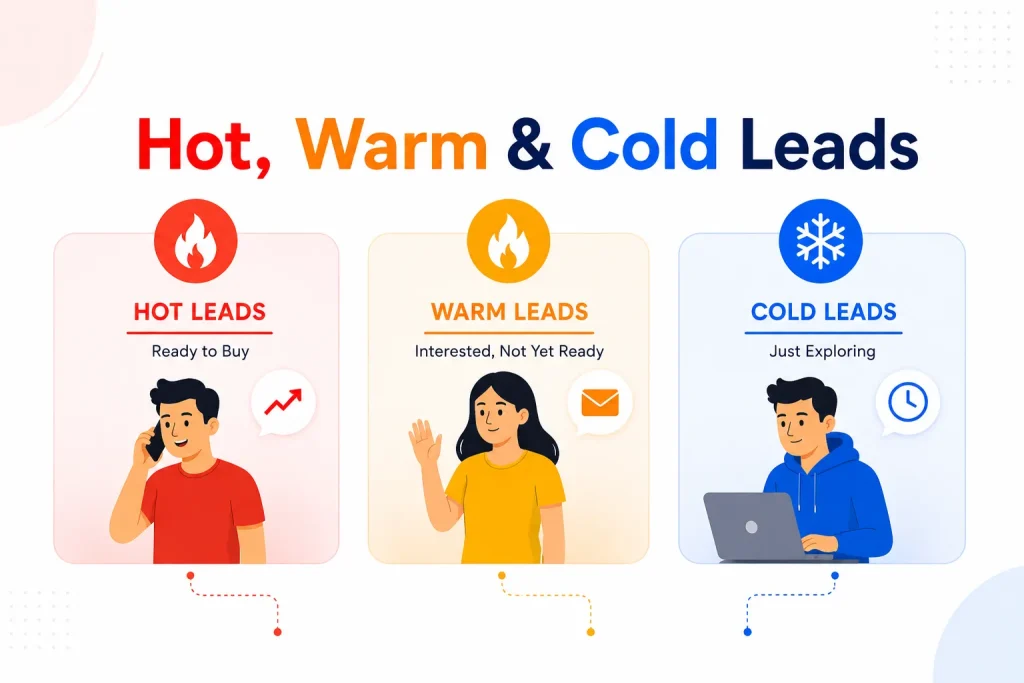
Hot, warm, and cold describe how close a lead is to becoming a client, based on what they’ve done recently, regardless of how good that first call felt. The three sections below go deeper into each one; this is just the quick version.
What Is a Cold Lead?
A cold lead has shown little to no engagement. They might be on a list from an early outreach effort, a directory listing, or a form fill from months ago that never went anywhere. There’s no recent signal that they’re actively considering working with you.
What Is a Warm Lead?
A warm lead has engaged, but not urgently. They’ve opened a few emails, visited your pricing or services page, or replied once without setting a timeline. They’re aware of you and mildly interested, but nothing suggests they need to decide this week.
What Is a Hot Lead?
A hot lead is close to saying yes: recent contact, a rough sense of budget, and the real decision-maker in the conversation, not just whoever filled out the form. Hot leads are rare compared to warm and cold ones. When one shows up, it’s worth dropping what you’re doing to respond.
Hot Leads: Signs, Sources, and How to Respond Fast

What Makes a Lead Hot
A lead is hot when three things come together: they’ve contacted you recently, they have an idea of what your service will cost, and you’re speaking with someone who can make the decision. One signal alone doesn’t mean much, but when all three are present, the lead is worth acting on quickly.
Signs a Lead Has Gone Hot
You’ll usually notice a lead getting serious when they start taking actions that move the conversation toward a buying decision. Look for signs like:
- They book a call
- They ask for a proposal
- They share their budget or timeline
- They bring a manager, founder, or another decision-maker into the conversation
Source Of Hot Leads
Hot leads usually come from places where the prospect already has some interest in what you offer. Common sources include:
- Demo or proposal requests
- Pricing page visitors who reach out afterward
- Referrals from existing clients or contacts
- Past leads who come back when they’re ready to buy
Why Hot Leads Need a Same-Day Response
Hot leads can cool off quickly. If someone is ready to talk today but doesn’t hear back until two days later, they may have already contacted another provider. Research from Harvard Business Review also found that the chances of qualifying an online lead drop significantly as response time increases.
How to Follow Up With a Hot Lead
Reply the same day and keep the next step simple. Send the proposal or quote as soon as it’s ready, then give them something specific to act on, such as a booking link, price, or proposed start date. If another person needs to approve the deal, bring them into the conversation early rather than passing messages back and forth.
Example of a Hot Lead
A prospect who replied yesterday, has seen your pricing, and is looping in a business partner to sign off, that’s hot. Everything about it says they’re close, and the only thing that can cool it down now is a slow response.
Warm Leads: Signs, Sources, and How to Keep Them Moving

What Makes a Lead Warm
A warm lead knows who you are and has shown some interest, but there’s no real urgency yet. They may have taken one or two actions that suggest interest, but they’re not quite ready to make a decision.
Signs a Lead Has Gone Warm
You’ll usually see a warm lead showing interest without taking a clear buying action. Some common signs include:
- They open multiple emails
- They visit your pricing or services page more than once
- They follow up on their own
- They attend a webinar or demo
Source Of Warm Leads
Warm leads often come from channels where people are still learning about your business or considering their options. Common sources include:
- Content downloads
- Webinar signups
- Repeat website visits
- Referrals without a specific timeline
- Past leads who are interested but not ready to buy yet
How to Follow Up With a Warm Lead
Keep warm leads in a regular follow-up rotation, roughly every five to seven days. Make each message relevant to what they’ve actually done instead of sending a generic check-in. Share something useful, such as a relevant case study or portfolio piece, and suggest a low-pressure next step like a short call rather than asking for a proposal right away.
Example of a Warm Lead
A contact who downloaded a pricing guide, opened the follow-up email, and replied with a question, but hasn’t mentioned budget or a start date, that’s warm. Worth a personal reply, not worth clearing your afternoon for.
The main difference is urgency. A warm lead might know your pricing, like your service, and still be thinking about buying next month or next quarter. A hot lead is already treating the purchase as a current priority and is taking steps toward a decision.
Cold Leads: Signs, Sources, and Whether They’re Worth Keeping

What Makes a Lead Cold
A cold lead is someone who hasn’t shown any recent, meaningful interest. It doesn’t matter how they first entered your pipeline. If there’s been no activity or response for a while, they belong in the cold category.
Signs of a Cold Lead
You’ll usually know a lead is cold when there’s been little or no activity after several attempts to engage them. Common signs include:
- No reply to the last two outreach attempts
- No page visits beyond the original form submission
- Contact information that’s several months old with no activity since
- No response to recent emails or follow-ups
Source Of Cold Leads
Cold leads often come from older lists or contacts who showed interest once but never followed through. Common sources include:
- Old contact lists
- Directory listings
- One-time, early-stage form submissions
- Outreach that never received a response
- Leads that were once active but have gone quiet
How to Follow Up With a Cold Lead
Move cold leads into a slow, automated follow-up sequence. Send a useful guide, case study, or other relevant content every few weeks without asking for a response. Avoid personal calls and repeated manual check-ins until they show a clear sign of interest. Review the list regularly and move anyone who becomes active back into your warm or hot pipeline.
Example of a Cold Lead
A contact who filled out a form four months ago but hasn’t opened or responded to any follow-up emails since is a cold lead. Keep them on your list and let automation handle the follow-up instead of spending time on a personal call this week.
Some cold leads may become interested again months later, especially if they continue receiving useful content from you. There’s usually no need to delete them, but they also shouldn’t take up your team’s manual follow-up time
The Difference Between Hot, Warm, and Cold Leads
Put side by side, the difference comes down to three things: how recently they’ve engaged, whether budget has come up, and whether you’re actually talking to the person who can say yes.
| Temperature | Signal | Typical Source | What to Do |
|---|---|---|---|
| Cold | No recent engagement | Old list, directory, single form fill | Low touch, automated nurture |
| Warm | Some engagement, no urgency | Content download, repeat visit, one reply | Regular follow-up rotation |
| Hot | Recent, active engagement | Proposal request, discovery call booked | Respond same day |
How to Tell Them Apart: A Simple Scoring Method
You don’t need software or a weighted point system to score a lead well. Three honest questions get you most of the way there, and they’re the same three questions each of the sections above are really answering.
- Recency of contact: have they engaged in the last few days, or gone quiet? Silence is the strongest signal that a lead is cooling off, stronger than anything they said on the first call.
- Budget confirmed: do they know roughly what this costs, and are they still in the conversation? Interest without any sense of budget is warm at best, not hot.
- Decision-maker engaged: is the person you’re talking to able to say yes? A great conversation with the wrong person is still a warm lead, not a hot one.
It’s a fast way to sort a list, nothing more elaborate than that. Most agencies don’t need anything heavier to prioritize their day.
What Lead Scoring Means, and Why It Matters More for Agencies
Lead scoring is a consistent way to rank leads by how likely, and how soon, they’re going to buy, instead of relying on instinct. According to HubSpot’s guide to lead scoring, it exists to help sales teams focus their time on the prospects most likely to convert, rather than working every lead equally.
That matters more for agencies and freelancers than it does for a typical in-house sales team. An in-house rep usually works one funnel, for one product, with a shared quota to fall back on. An agency runs several client-acquisition pipelines at once, often solo, whether that’s a creative agency or a one-person consultancy. A missed hot lead can cost more than a deal; it can cost the whole client relationship, since there’s rarely a second one waiting in the same pipeline. If you’re comparing tools built for this kind of work, our breakdown of the best CRMs for digital marketing agencies looks at what these tools handle differently for a service business running several pipelines at once.
Common Mistakes That Misclassify Leads
- Treating every lead the same, regardless of how recently or strongly they’ve engaged.
- Scoring once and never revisiting it. Temperature should update as behavior changes, not stay fixed from the first call.
- Letting hot leads sit in a shared inbox or spreadsheet while someone “gets to it” later.
- No clear handoff when a lead becomes a deal, so temperature and context get lost right when they matter most.
Most of these come down to neglect, not bad judgment; the scoring itself is rarely the hard part. This is also usually where a spreadsheet gives up. There’s no way to just filter down to what’s hot right now, so people end up scrolling instead of acting. Our guide on the benefits of a client management system covers why this specific failure point pushes most growing agencies off spreadsheets entirely.
How Taskip Helps You Score and Prioritize Leads
Knowing how to score a lead only matters if you can see the score without digging for it. Here’s what that looks like inside Taskip.
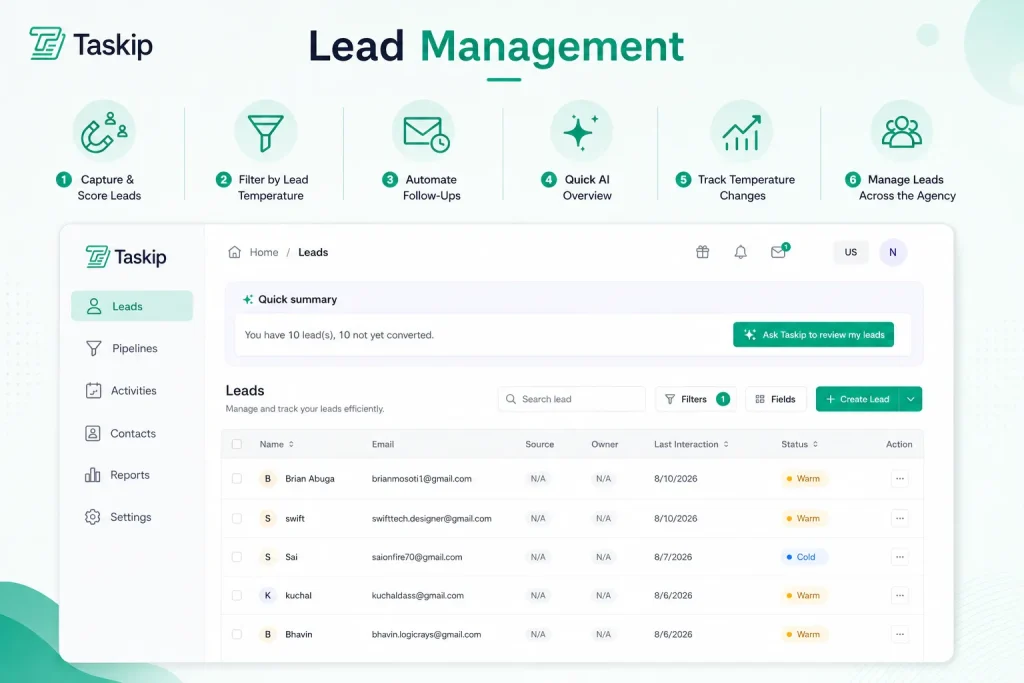
Capture and Score Leads in One Place: Every lead starts in Taskip’s lead management, with contact and company details, activity history, and a quick summary view so you can read a lead’s status without opening the full record every time.
Filter by Temperature Instead of Scrolling: Once leads are tagged hot, warm, or cold, filtering turns the list into a priority queue: who to call today, who stays in rotation, who can wait.
Automate What Happens After the Tag Changes: Workflow automation can handle the busywork around a temperature change, like flagging a lead for follow-up the moment it goes quiet, so nothing depends on someone remembering to check.
Quick AI Overview: Taskip features a AI quick lead overview summery. Just a signle button click brings you a full review of leads. This makes tracking and lead overviewing much more conveninet.
Temperature Follows the Deal Forward: When a lead becomes an opportunity, that same hot, warm, or cold status shows up as a temperature badge in your pipeline, so it stays visible instead of resetting the moment it changes stage.
See It Across Your Whole Agency: If you’re running this across several client relationships at once, it’s worth seeing how the rest of Taskip’s client portal for agencies ties leads, proposals, and client communication into the same place.
Once a hot lead signs, our client portal onboarding guide covers what to do next.
Conclusion
Most agencies already have a rough sense of which leads are hot and which have gone cold. It’s just rarely written down anywhere consistent. That’s really all hot, warm, and cold lead scoring comes down to: three honest questions, recency, budget, and who you’re really talking to, turned into a habit instead of a one-off guess.
Score a lead once and the label goes stale within a week. What keeps it useful is making sure that score stays visible, not locked in one person’s head, and letting it travel with the lead from first contact all the way to the signed deal.
Start scoring and prioritizing your leads with Taskip →
FAQs on Hot, Warm and Cold Leads
What is the difference between a hot lead and a warm lead?
A hot lead has recent contact, confirmed budget, and an engaged decision-maker, usually all three at once. A warm lead typically has one or two of those signals, not all of them, and nothing urgent pushing a decision.
Is a hot lead the same as a qualified lead?
Not quite. Qualified means they fit what you’re looking for: the right budget range, the right need, the right authority to decide. Hot means they’re acting on it right now. A lead can be well qualified and still cold if they’ve gone quiet, or hot before you’ve fully confirmed fit if urgency shows up fast.
What does lead scoring mean?
Lead scoring is a way to rank leads by how likely and how soon they’re expected to become a customer, so follow-up time goes to the right prospects first instead of being spread evenly across everyone.
How do you prioritize leads without a CRM?
Sort by the same three signals: recency of contact, confirmed budget, and decision-maker involvement, and revisit the list often. It works at a small scale, but it breaks down quickly once you’re managing more than a handful of active leads.
How often should lead temperature be reassessed?
Every time there’s new contact: a reply, a meeting, a stretch of silence. Treat it as something that shifts with behavior, not a tag you set once and forget.
How quickly should you respond to a hot lead?
Same day, ideally within a few hours. The longer a hot lead waits for a reply, the more likely it cools back down to warm.