Productized Services: In-Depth Guide For 2026 (Everything You Need To Know)
Do you know you can raise your profit margin by 30-40% by providing productized services instead of a custom or hourly-priced service?
Yes, you heard right! Whether you are a freelancer, web designer, or running a digital marketing agency, productized services can offer standardization, making your deliveries simple and saving you hours.
But what is productization of service,s and why should freelancers and businesses use this strategy?
In this guide, we will analyze productized services in detail and learn how you can implement them too. So, let’s go:
What Are Productized Services?
A productized service offers a set of services forming a package (with a fixed rate) that is presented as a single product.
With a productized service, you do not need to customize every project from scratch. Instead, it allows you to provide a standardized service to the clients, with which they can have a clear concept of what they’re buying and how much it will cost.
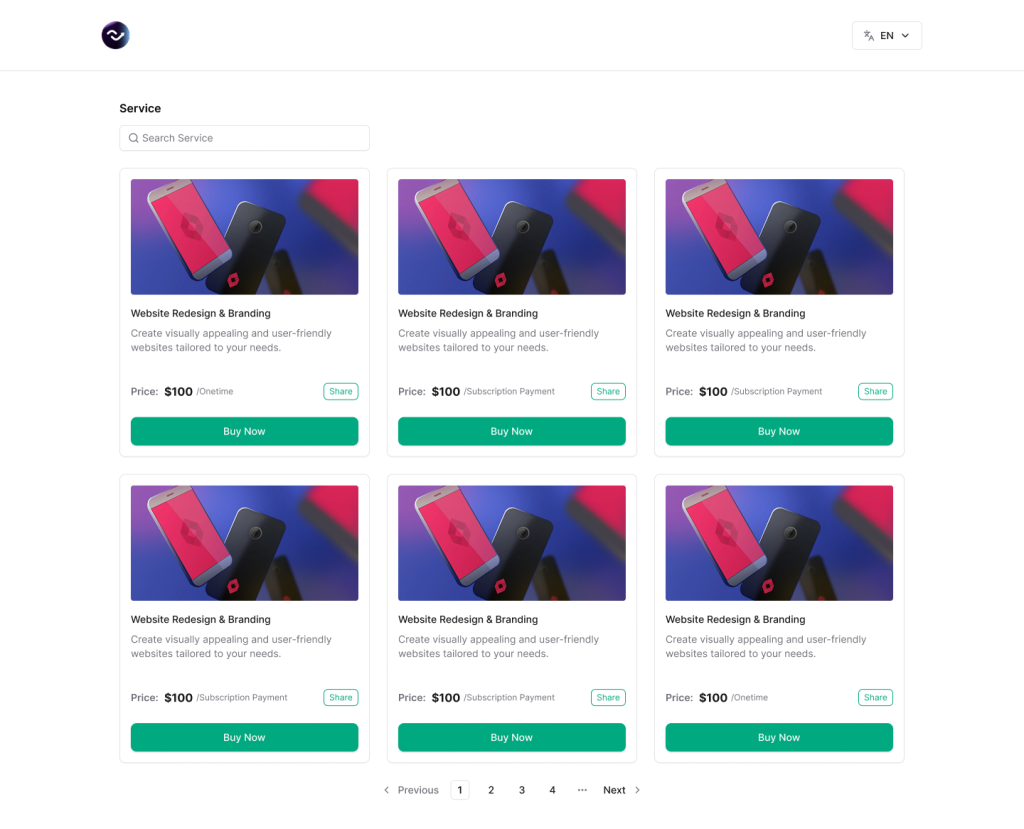
Image: Productized Service
Not clear? Let me give you an example:
Example Of Productized Services
Suppose you are a freelance graphic designer. Now, instead of charging $50/hour and designing everything custom, why not offer a “Logo Design Package” for $300? This can include:
- 3 initial logo concepts
- 2 rounds of revisions
- Final files in multiple formats
Similarly, there can be other packages like “Social Media Branding Package” or “Website Banner Design Package.”
These packaged services you are providing here are what we are referring to as ‘Productized Service.’ Offering such packages, clients get transparent pricing and can choose what services they actually need.
However, the best part of using a productized service is that you can deliver the same package repeatedly without redesigning it from scratch every time for new clients! This makes productized service an efficient and scalable strategy for freelancers or solution providers.
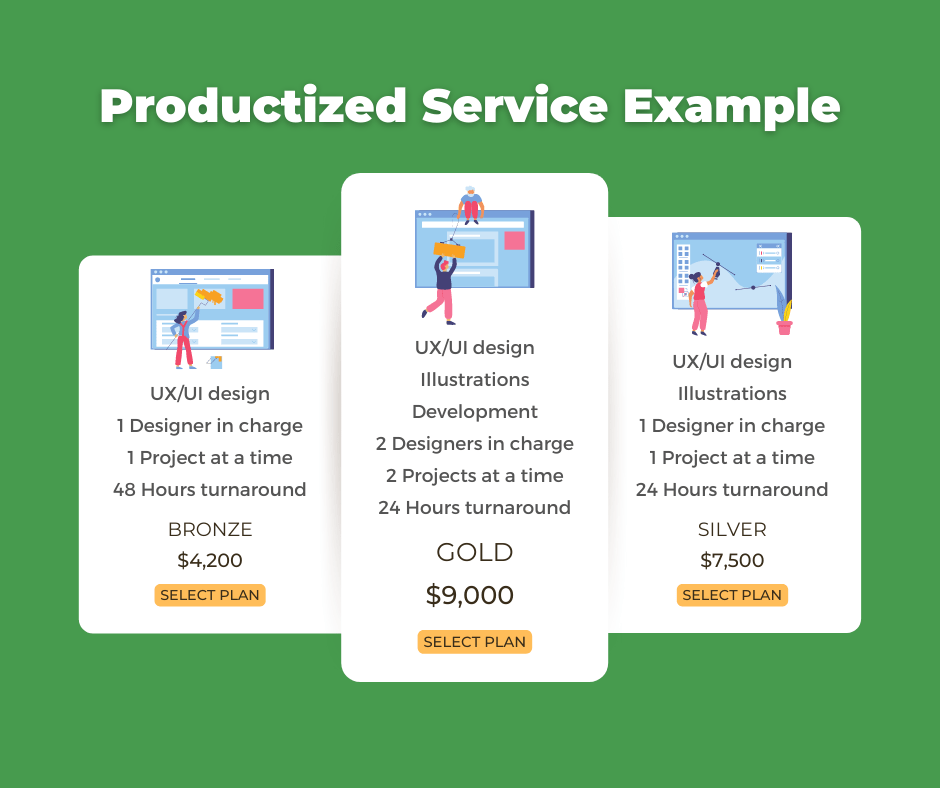
Source: FlashHub
Key Features of Productized Services
Pre- Defined Services (What’s Included or Excluded)
Each productized service has a transparent breakdown of what the clients will get in this package. This further includes the scope, outputs, and limitations, so the purchaser gets a well-defined delivery with zero confusion of what is included and what is not.
Fixed Price
Productized services offer you a complete package, clearly stating what services you are getting at a pre-set price. This keeps your upfront cost transparent.
Repeatable Process (SOPs)
Productized services set your packages as Standard Operating Procedures (SOPs). You can easily repeat the steps, from onboarding to delivery; everything is standardized. As a result, you do not need to invest time to work from scratch every time. Thus, you can provide your services effortlessly without worrying about errors and deadlines.
Mentioned Timeline
Unlike custom deliveries, where a fixed timeline or assurance is not usually provided, productized services mention a fixed timeline within the package. For example, if you are offering a ‘Logo Design Package’, the timelines can be stated as
- First draft delivered in 3 days
- Revisions completed in 2 days
- Final files delivered in 7 days
Such a timeline goes the same for every client. As a result, you can plan resources, manage multiple clients in an organized manner, and in a systematic way.
Scalable Structure
The structure of productized services is designed in such a way that you don’t need to have a new strategy and work planing for every project/client. The package is standardized to make it repeatable. This way, you can use the same service package for multiple clients that boosts scalability.
Self-Serve Purchase: No Lengthy Consultancy
The customers or the clients get all the necessary details of the productized services within the package. As a result, they don’t require spending much time on consultancy or sales calls. This not only makes the service purchase decision easier but also quicker.
Benefits & Drawbacks of Productized Services
Productized services have both positive and negative aspects. It makes your services easy to deliver and more organized. But at the same time lack of customization and flexibility sometimes fails to meet clients’ demands.
Let’s explore the pros and cons of produtized services in detail:
Pros Of Productized Services
1. Revenue Prediction
In project-based work, revenue prediction is difficult as there is no fixed pricing for work to get an idea. But with fixed pricing and repeatable processes in productized services, forecasting becomes easier compared to custom or hourly-based services.
2. Scalable Business Model
As with the same package, you can serve multiple clients without needing to do the task in a completely new way. This is what takes your scalability to the next level.
3. Boosting Profit Margin
Productized services save your customization cost with their pre-set templates and automations. Studies show that you can increase your profit margin by 30% to 40% with productized services in contrast to a custom service.
4. Time Saving
Productized services help you save significant time by eliminating repetitive and unnecessary work. Since the service is standardized and offered as a fixed package, you no longer need to redesign the process for every new client. This way, you can focus more on scaling your business instead of managing day-to-day tasks.
5. Client-Friendly Experience
In an hourly or a custom service, the clients need to hold hours of meetings to set a price, negotiate, and come to a conclusion. This is a hassle from both the user end and the service providers’ side. But with a productized service, the clients can go through the services, what’s included or excluded, and make a purchase decision quickly. This boosts the client experience many times.
6. Defined Service Boundaries
What if you submitted your project and all’s done, but after a few days, your client asks for a quick addition? Annoying right?
A productized service can save you from such hassles. Within the package, you can mention the service boundaries with clear inclusions and limits. This will help you to get minimal unexpected requests.
7. Easy Marketing & Sales
The fixed pricing of a productized service makes your marketing and promotion much easier than a customized one. Besides, here, you know exactly what you are offering to your clients, which gives you confidence.
8. Faster Payments
In a productized product, you don’t have to track the working hours or deal with invoices. This makes the payment process faster and more effective.
Cons of Productized Services: Challenges
- Less personalized than traditional service-based models
- Not every service can be productized
- Clients may need certain customizations that aren’t available in the package
- Some clients prefer to talk to the service provider before purchasing; such a scope is very limited in a productized service
- Finding the right price is tricky for the service provider. However, they should implement strategies to experiment with the price. I have discussed this in the later sections of the article; keep reading.
- Sometimes, there is too much automation in the system, which makes the customer feel robotic. Therefore, while productization of services, you should automate the repetitive but keep the human touch intact.
Who Should Use a Productized Service?
Businesses, solopreneurs, or creative agencies in different fields can productize their services to offer the clients a standardized package. Here are the most popular fields where productized services are mostly used:
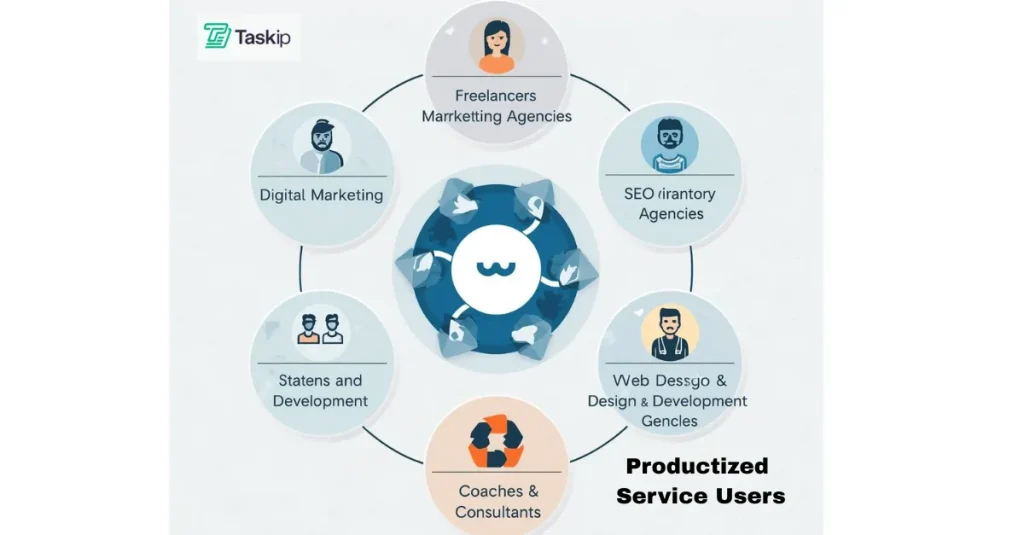
Freelancers
Fiverr or Upwork are popular platforms for freelancers that use a productized service model. However, freelancers can have their productized services on their own website, which allows them to present their skills as experts.
For example, if you are a freelance content writer, you can offer a productized service such as:
| Monthly Blog Writing Package – $400/month – 4 SEO-optimized blog posts – Up to 1,000 words per post – Keyword research included – Delivered weekly – 1 free revision |
Digital Marketing Agencies
Digital marketing agencies have a wide range of services to offer. Instead of a scattered approach, agencies can offer an individual or a variety of packages for a specific service. For example, you can create a service package for blog writing, SEO, ad running, email marketing, video editing, and more.
SEO Agencies
As an SEO agency or any individual freelancer who is an expert in SEO, you can categorize packages for SEO services. For example, a “Keyword Research Package”, “Monthly Backlink Building Package”, or a “On-Page SEO Optimization Package”.
Web Design and Development Agencies
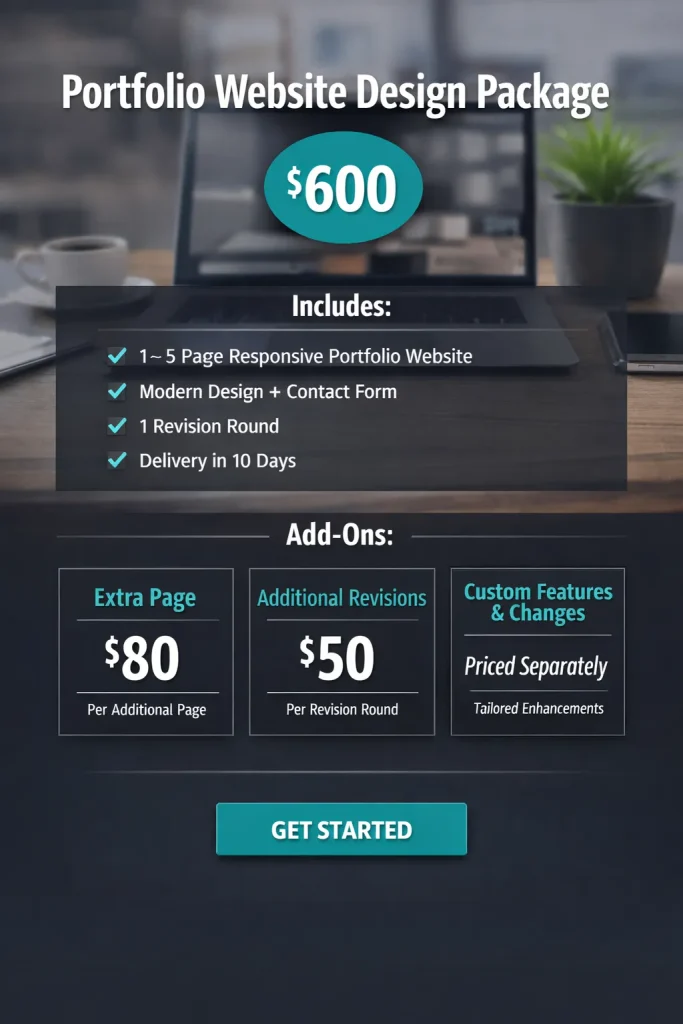
When it comes to web design, designers often have to take the hassle of frequent additions and requests after final delivery. This is something very annoying. You can use productized services for your design offerings, and clear the limitation on what’s included or excluded. And the best approach is to mention extra charges for add-ons. For example:
Coaches & Consultants
Consulting firms can productize their expertise into pre-defined packages, such as strategy sessions or monthly coaching programs. This approach provides structure, scalability, and reduces reliance on fully bespoke solutions, simplifying operations.
Startups
For startups, the productized services bring easy and easy service providing facilities by turning essential services into pre-defined, repeatable packages. Thus, the fresh business can reduce the time spent on custom solutions and focus more on growth and core operations.
Traditional Services vs. Productized Services
Traditional Services: In a traditional service, the client mainly reaches the service provider, or vice versa. Then they have meetings, consultancies, discuss services, set prices, negotiate, agree to a price, and discusses on scope of work.
The deal closing process is highly time-consuming. And it not only ends here, but you also need to get the contracts and invoice prepared and signed. And the saddest part is, you need to repeat the same process for every client you deal with.
Productized Services: In contrast to traditional services, a productized service designs a package of services with a fixed delivery time and price. It also includes the scope and limitations of the service in a clear way. Thus, the service purchasing and selling process becomes too easy.
The client reaches the service provider or the provider reaches the client and shares the website link. Clicking on the site, the client gets all the productized services listed with all details. From there, he/she can choose the desired service in clicks.
Productized Services Vs. Packaged Services: Differences
Productized services are often confused with packaged services; however, they are similar but not exactly the same.
Packaged services offer predefined bundles of services like productized services, but the difference here is that they often go through customization for each client. In contrast, productized services are standardized.
| Criteria | Productized Services | Packaged Services |
| Customization | Often customized for each client | Minimal to zero customization |
| Pricing | Pricing can vary from customer to customer | Fixed and transparent |
| Extra Service Score | Flexible; clients can ask for additional revisions or add-ons | Pre-stated; clients know the limits clearly |
| Standarization | Semi-standarized | Fully standardized and repeatable |
| Delivery Timeline | Vary | Set and consistent |
| Scalability | As it goes through customization, scalability is hard | Repeatable process and very easy to scale |
| Example | Website package tailored for each client | Logo design package: 3 concepts, 2 revisions, 7-day delivery |
Productized Services Vs. SaaS Solutions: Differences
A productized service is a human-delivered service that is packaged, standardized, and sold like a product. You need to set fixed pricing, defined deliverables, and timelines to make the offerings clear to the clients.
For example, a freelance designer might offer a Logo Design Package: 3 concepts, 2 revisions, delivered in 7 days. Here, the service itself is the product.
On the other hand, a SaaS solution is a software platform that helps you to create, manage, automate, or deliver productized services. For instance, with client management software like Taskip, you can easily productize your services with the Service Catalog feature. Such a tool allows providers to:
- Create pre-defined service packages
- Automate client intake and payments
- Track timelines and deliverables
The key distinction is simple:
- Productized services = the packaged, repeatable service the client receives
- SaaS solutions = the tool that helps you systematize and scale those services
NB: SaaS tools can help streamline and manage productized services, but you don’t need to build or create software to productize a service. You can do it using clear processes, templates, and workflows, with or without a SaaS platform.
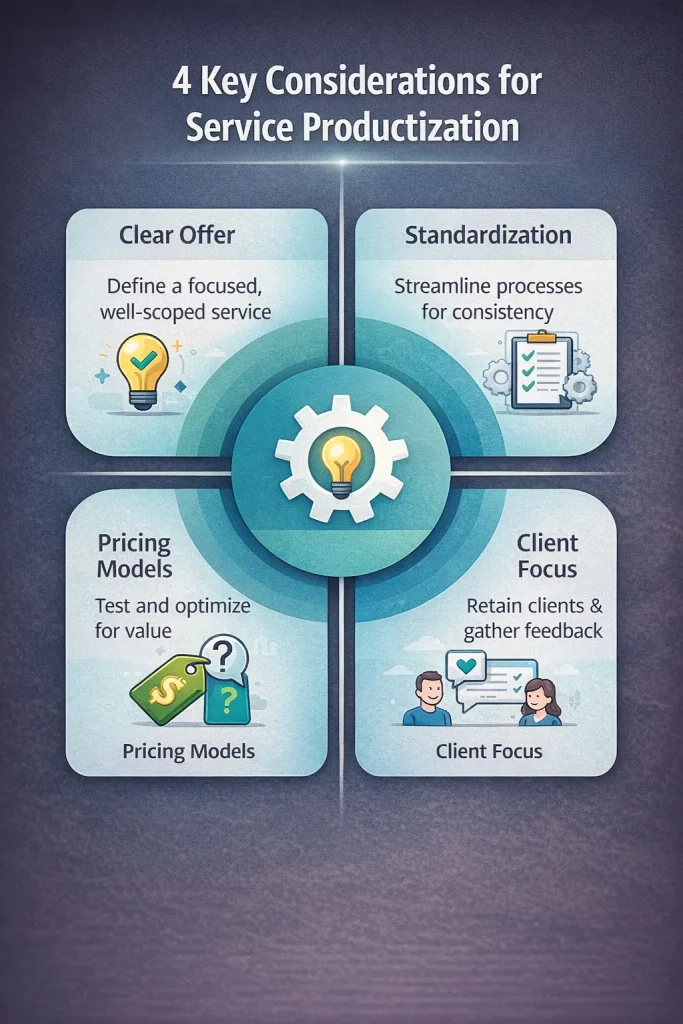
4 Key Consideration To Plan a Service Productization Strategy
1. A Clear & Focused Offer
You don’t need to have a perfect package in the beginning. Start with a simple version of your service that solves one specific problem for one specific audience. This will help you to launch faster and get feedback from clients on the next advancements.
2. Standardization
A repeatable structure is crucial for productized services. Plan the package and document the workflow in such a way that you can repeat the process for all clients who choose that service. This way makes a standardization of all your services.
3. Experiment with Price Models
Be mentally prepared to experiment with your service prices. Test different models like one-time packages, tiered plans, or subscriptions, to understand what resonates with your audience. Thus, by tracking performance and client behavior, you can gradually refine pricing over time.
4. Focus on Client Retention & Feedback
Client retention is the core to boost your revenue. Therefore, while productizing your services, make sure you can keep up the delivery consistency. This is an important aspect in choosing the delivery time setting for your service.
Consistency and meeting expectations bring you good client feedback and repeat customers, which allows you to grow.
How To Productize Your Services? – 8 Easy Steps With Real Example
Suppose you are a content writer. Let’s learn how to productize your service,e taking this as an example, with simple steps:
Step 1: Choose One Service & Give A Service Name
Start by selecting a single service you already deliver well and on a regular basis, such as blog writing, logo design, or an SEO audit. Focusing on one service (e.g., blog writing) keeps things simple and manageable at the beginning. Next, select a name for your service.
| Example Of Service Name: Blog Writing Service |
Step 2: Define What’s Included
Decide exactly what clients will get in the What’s included section. This will help the clients to get a clear idea of the specific services they will get in this package and also know the boundaries.
| Example: What’s Included in the Blog Package: – 800–1,000-word blog post – SEO keywords included – 1 round of revisions – Meta description and SEO title – Delivered in Word or Google Docs Not included: social media promotion, extra revisions, or graphic design. |
Step 3: Set a Fixed Price
One of the major features of productized services is a fixed price instead of hourly rates. Therefore, charge a single price for your service.
| Example Pricing for the Blog Writing Package: Basic: $100 for 1 blog post Standard: $270 for 3 blog posts per month (save $30) Premium: $450 for 5 blog posts per month (save $50) |
Step 4: Set a Clear Timeline
Decide how long delivery will take. Predictable timelines build trust.
| Example Timeline: 1 blog post: 5–7 days 3 blog posts: 14–16 days 5 blog posts: 25–30 days |
Step 5: Create a Repeatable Process (Internal Use)
Next, you must document the steps you’ll follow for every blog post. This ensures consistent quality and makes the process easy for you to scale.
For this task, you can use a document, spreadsheet, or wiki to list your workflow. However, tools like Taskip, Trello, Asana, or ClickUp work great as a productized service software. Here you can break your service into tasks with deadlines and assign them to yourself or your team.
| Example Blog Writing Workflow: Receive topic & keywords from client Research and outline the blog Write the draft (1,000 words) Internal proofreading & editing Send to client for feedback Apply 1 round of revisions Deliver the final version with the meta description & SEO title |
Note: This is for service providers’ use only to maintain consistency and smooth delivery; clients don’t see this.
Step 6: Simple Purchase Process
Offer clear packages with prices and let clients pay online using Stripe, PayPal, or credit cards. This makes the process easy for clients to buy your service without long emails or calls.
Moreover, for ongoing packages, you can also set up recurring payments so clients don’t have to pay each time. Thus, the purchase process can be simplified, saving time for both you and your clients.
Step 7: Launch and Market Your Offer
Once your blog writing package is ready, it’s time to let clients know it exists. Share your service on your website, social media, email list, and freelance platforms. You can also create special launch promotions, like a discount for first-time clients, to attract initial orders.
Step 8: Collect Feedback and Improve
After delivering your first orders, ask clients what worked well and what could be better. This helps you refine your service, workflow, and pricing, making it more attractive for future clients. You can collect feedback via email or a short survey and make improvements in your service accordingly.
How To Set A Price For Your Productized Service?
Setting a fixed price too high can scare clients away. In contrast, if your price is too low, you undercharge for your time. Therefore, starting with realistic pricing is crucial. But how to do that?
Below, I am sharing four price research ways that will help you to set a justified price for your services:
1. Research On Competitors’ Pricing
Start by finding 5–10 competitors who list their prices publicly. This will give you field level real example of how the services are sold and at what rates. Here are some platforms for easy research on your competitors:
| Platform | Best For | Pricing Data You’ll Find |
| Competitor websites | Direct benchmarking | Exact packages, deliverables, and price points |
| Clutch | Agency research | Hourly rates, minimum project budgets |
| Agency Spotter | Market comparison | Price ranges and engagement minimums |
| Product Hunt | Productized services | Subscription plans and package pricing |
| Reddit communities | Real-world validation | Crowd-sourced pricing, what people actually charge |
Pro tip: Use Wayback Machine to see how competitors’ pricing has changed over time. This will help you experiment with your pricing.
2. Compare Against Hiring In-House
When setting a price, ask yourself what it would cost you to hire this role full-time. This helps you to understand how effective a solution you are providing to your clients, and thus, you can set a price with confidence.
For example,
If you find that a Content Marketing Manager costs $80K/year (~$6.6K/month), you can easily charge $3–4K/month with a similar service.
The best platform to find employee salaries includes:
3. Focus on the value of Your Service Provides
Instead of guessing what to charge per hour or per task, you set a price based on the actual value your service creates. That is the money earned, time saved, or effort reduced with your service. This makes your pricing feel logical and fair, not random.
For example, if a client earns $10,000 per month from the leads or sales your content helps generate, charging $1,000–$2,000 per month feels reasonable. This is because the client isn’t paying for your hours; they’re paying for outcomes.
4. The “Goldilocks” Pricing Test
The idea behind the Goldilocks test is to offer three pricing tiers so clients can pick what feels “just right” for their needs and budget.
- Starter: Priced just below the DIY option
- Professional: Priced like a mid-level employee
- Premium: Priced like an executive or specialist
Top 5 Productized Service Software
1. Taskip
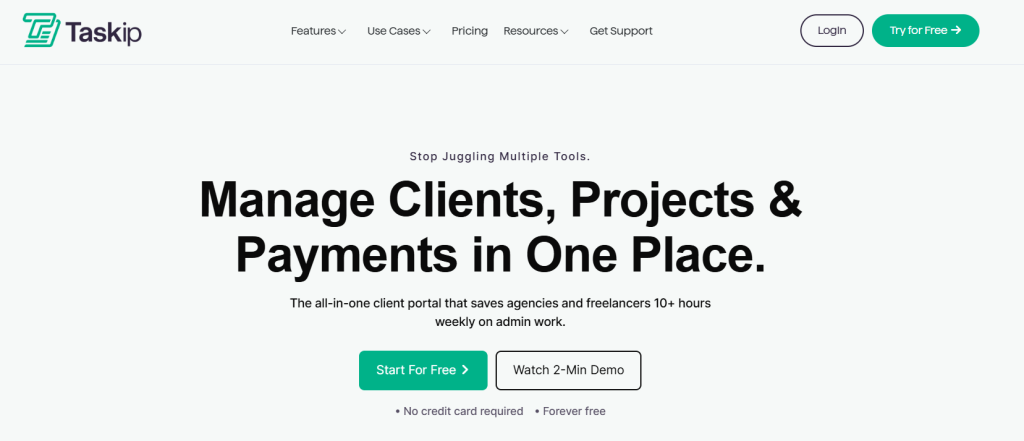
Taskip is an all-in-one client portal and agency management platform where you can showcase and manage packaged services through a service catalog alongside client portal, quotes, invoicing, and project tools. It helps agencies streamline sales, client work, and delivery all in one place
2. Zendo
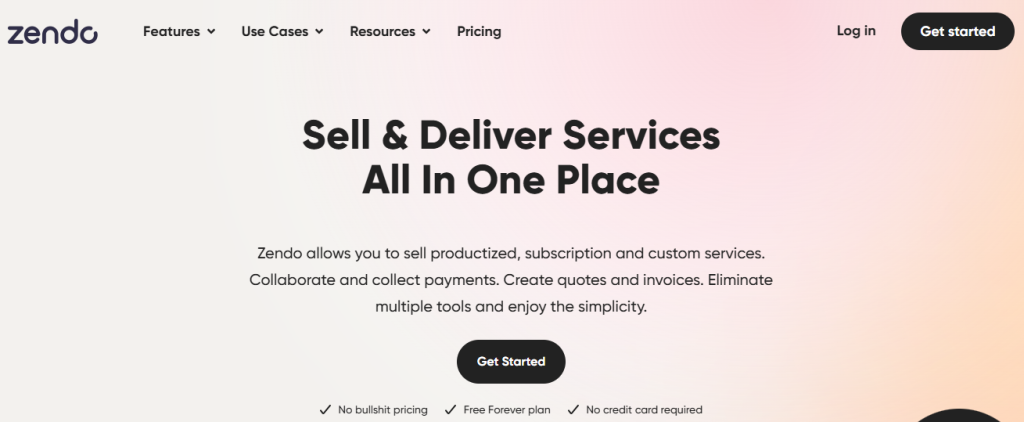
Zendo lets you create and sell productized services with defined scope & pricing, customizable order forms, and a service catalog that you can share publicly or embed on your website — complete with payment capture and workflows
3. ManyRequests
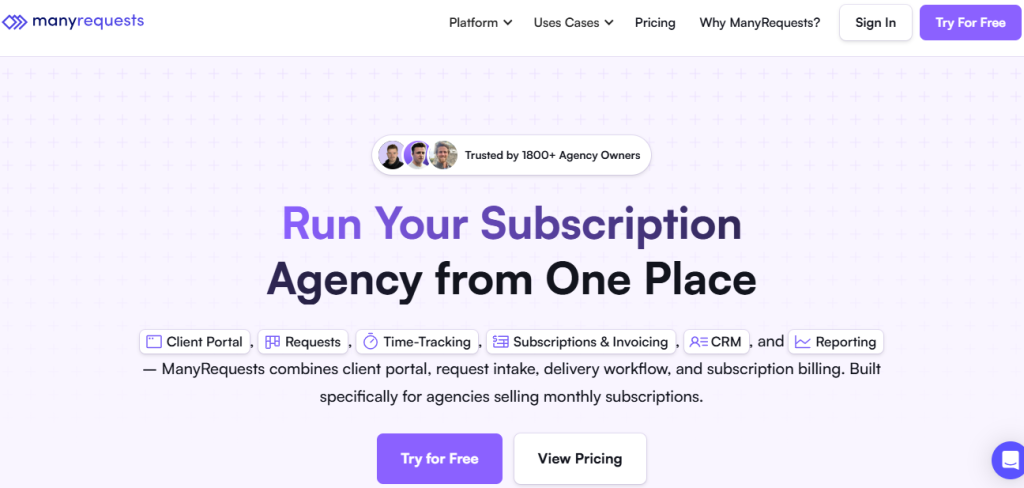
This tool is built specifically for productized service businesses. ManyRequests offers packaged services with checkout, client portals, invoicing, recurring billing, and Kanban task management to deliver and scale efficiently.
4. Service Provider Pro (SPP)
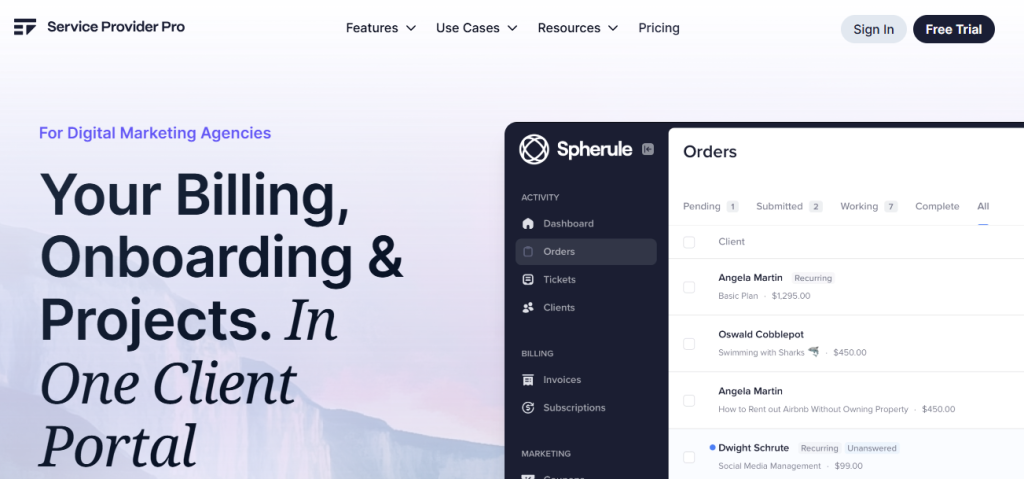
Service Provider Pro (SPP) is an agency-centric platform that combines service catalogs, client portals, billing, and CRM. Thu,s it lets you set up productized service offers and intake forms with centralized delivery tracking.
5. Assembly
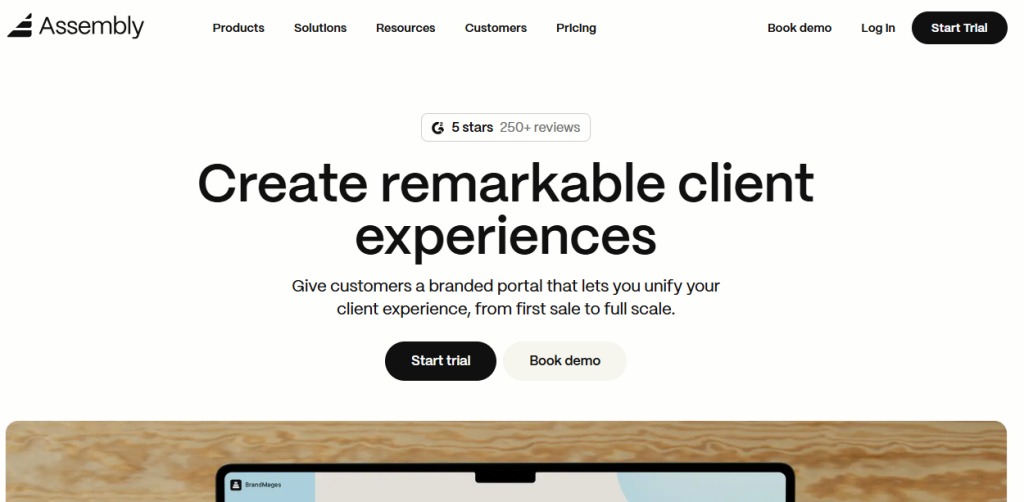
Assembly is a modern AI-powered client portal and CRM that supports selling productized services through branded portals, subscription billing, order flows, and built-in payments. This software is ideal for professional service firms.
Why Choose Taskip For Productizing Your Services?
Taskip provides you with an all-in-one project and client management solution. The extended features of the platform allow you to productize your service and showcase it to clients via its service catalog feature. Here are the amazing criteria that Taskip’s service catalog offers:
Easy Setup: Productize Your Service in Minutes
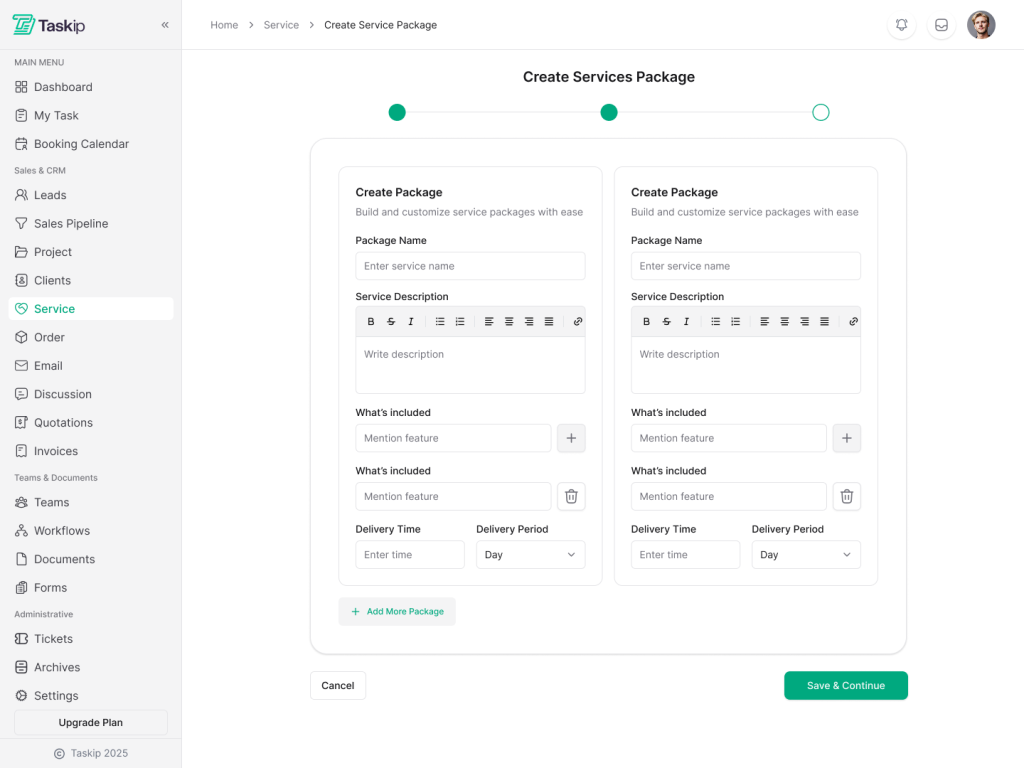
Productizing your services is super easy with Taskip. You will find the option to create a package in the Service catalog option. Here, add rich descriptions, set pricing, and delivery details, and your service page will be created. Moreover, you can upload stunning cover images and define your service type: whether it’s one-time, subscription, or custom pricing.
Versatile Service Display Options
The Taskip service catalog feature allows you to showcase your services in stunning grid or list layouts. Thus, clients can go through the services in their preferred style.
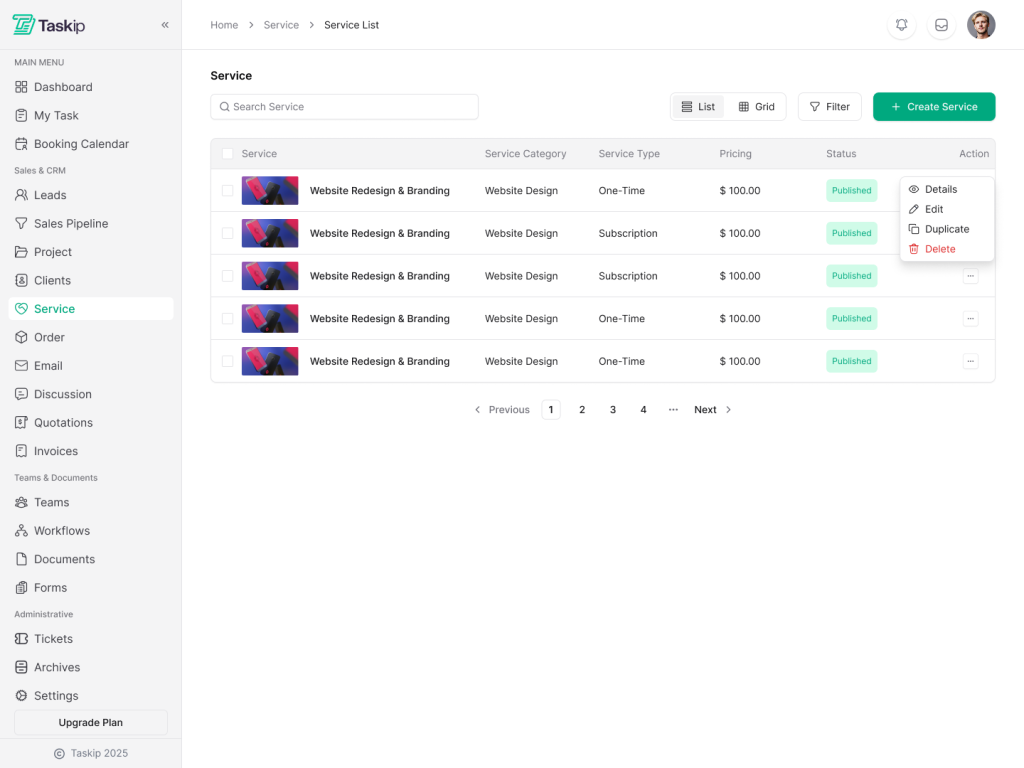
Image: Taskip Service Catalog View: Grid and list
Create Multiple Package Tiers
The service catalog feature of Taskip allows you to offer Basic, Standard, and Premium packages. You can design all these with different features, delivery times, and pricing.
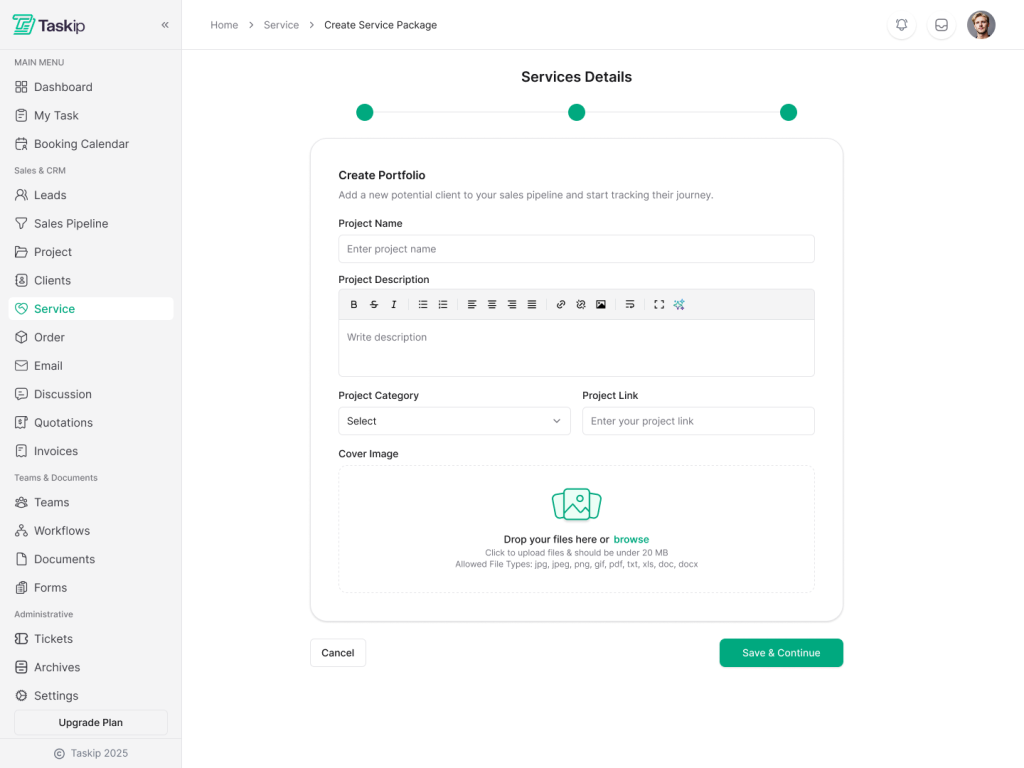
Feature Comparison In Services
You can compare two services side-by-side to help clients choose the perfect package. This is perfect for upselling and maximizing revenue.
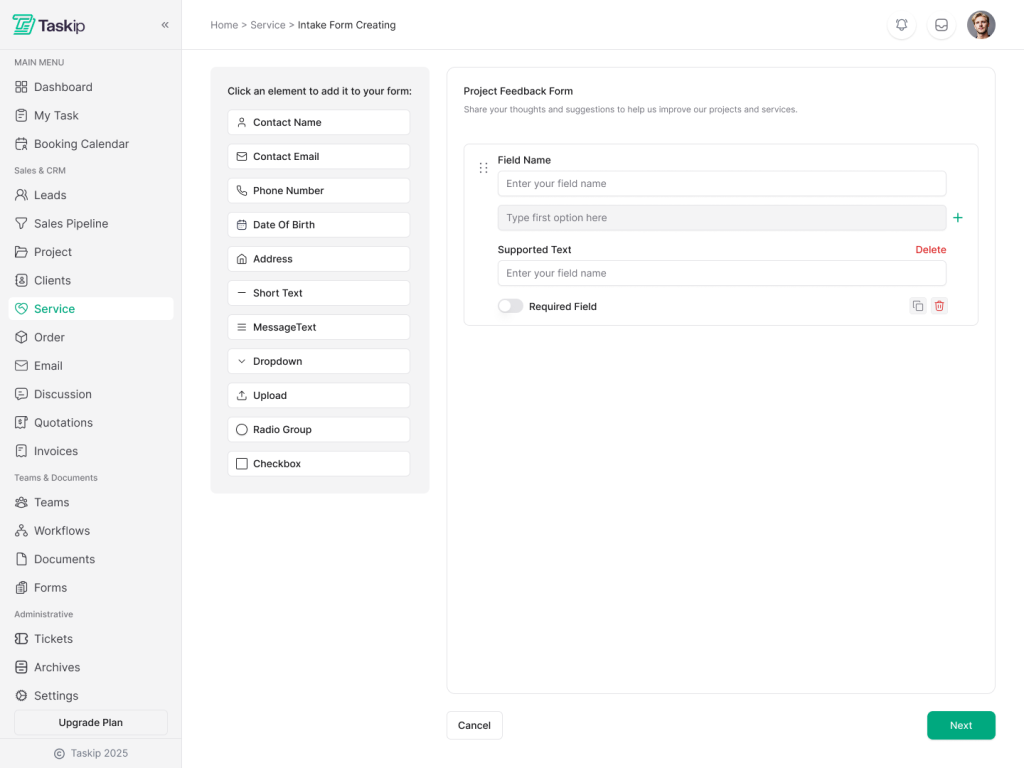
Custom Intake Forms
For feedback from the customers, you can set custom intake forms for each service with drag-and-drop simplicity. These forms can also be used to collect information. However, the best part is that you can choose to show the form before or after purchase.
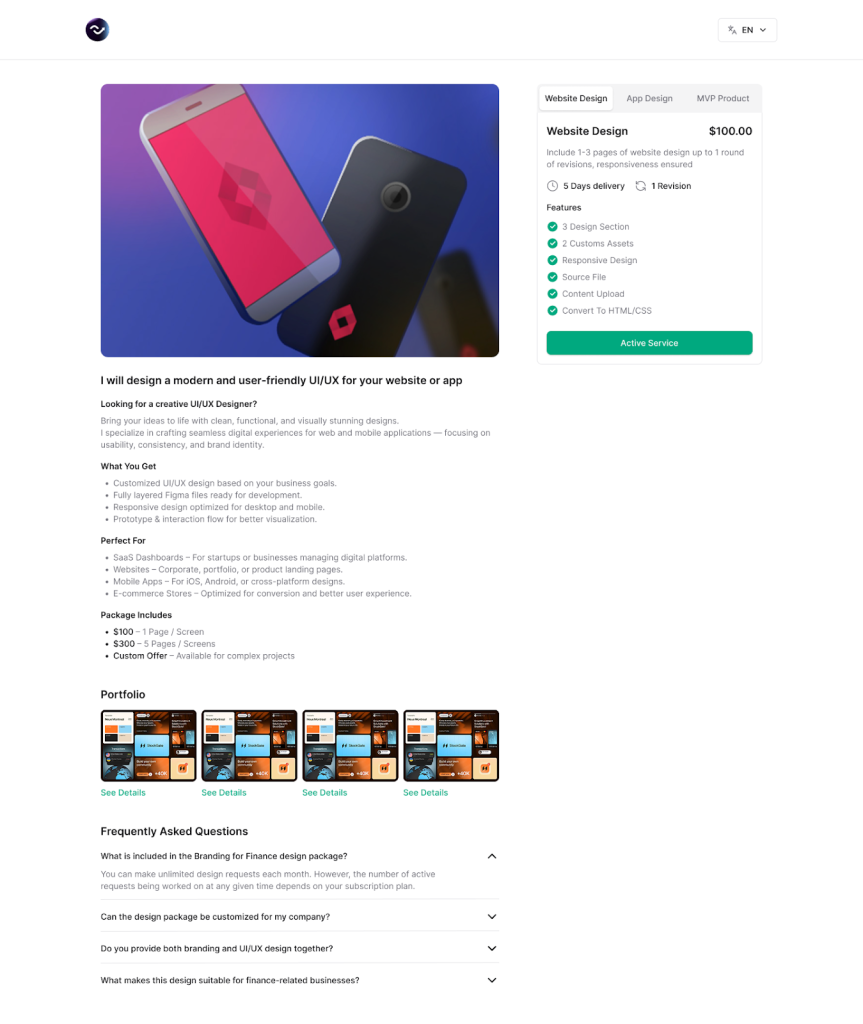
Showcase Portfolio & Answering Common Questions
Taskip offers you a portfolio integration feature in productized service page. You can showcase your past projects, case studies, and thus gain client trust. Besides, there is a FAQ section wher you can answer the common question sin the upfront. This makes the decision making proces easier for the clients as they do not need to go in conversation to clear up their queries.
Control Service Visibility & Access
You can keep the services as a draft and publish only when ready. Besides, it also has an option to unpublish when needed. This feature provides you with extensive control over the visibility and access of the services.
Common Myths About Productized Services
Myth#1: You Need Software to Productize a Service
Many assume you must build a SaaS or use expensive tools. But the reality is that with simple software like Taskip or ManyRequests, you can create and automate your productized services with simple templates and standardized workflows.
Myth#2: Productized Services Replace Human Interaction
Not true. While workflows are standardized, communication with clients is still crucial. Productization reduces repetitive tasks, but you still manage client expectations, answer questions, and maintain relationships.
Myth#3: Productized Services Only Work for Big Agencies
False! Freelancers, coaches, consultants, and startups can all benefit. Even a solo content writer can productize blog writing, creating packages like 1 post, 3 posts, or 5 posts per month.
Myth#4: The “One-Size-Fits-None” Fear
A common fear is that productized services feel generic or cookie-cutter. But that’s not how it works in practice. You standardize the process, not the outcome. Think of a restaurant: the kitchen runs on a set system, yet every meal is cooked fresh for each customer.
In the same way, productized services still solve real, specific problems; they just do it with clearer boundaries. However, those boundaries actually help both the service providers and the clients by avoiding confusion and endless extra requests.
The Bottom Line
Productized service is a great strategy to offer a streamlined service for your clients. It not only makes your business easier but also simplifies the process from the client’s side.
However, there are a few drawbacks to standardized services, such as customization limitations. But you can still have space open to provide the best service to your customers/clients.
Nevertheless, if you are looking for a all -in-solution for your service management, Taksip is the go to solutiuobn. Here, you can not only productize your services but also receive orders, manage tasks, clients, create proposals, invoices, and receive payment: all in the same platform!
FAQs On Productized Services
What makes a good productized service?
A good productized service has a clear scope, fixed pricing, and defined deliverables. Clients should instantly understand what they’re getting, how long it takes, and how much it costs once they go through the services.
How do I market a productized service effectively?
To market a productized service effectively, focus on clarity and outcomes. Highlight the problem you solve, the results clients can expect, and why your process is faster or easier than custom services.
Can I offer add-ons with my productized service?
Yes, add-ons are highly recommended. They let clients customize without breaking your core package. Common add-ons include faster delivery, extra revisions, ongoing support, or premium features.
What is the best platform for managing a productized service?
The best platform depends on your needs, but tools like Taskip, Zendo, ManyRequests, Service Provider Pro (SPP), and Assembly are popular. They offer service catalogs, client portals, structured requests, and payments; almost everything needed to sell and deliver productized services efficiently.

Get Summary On: