

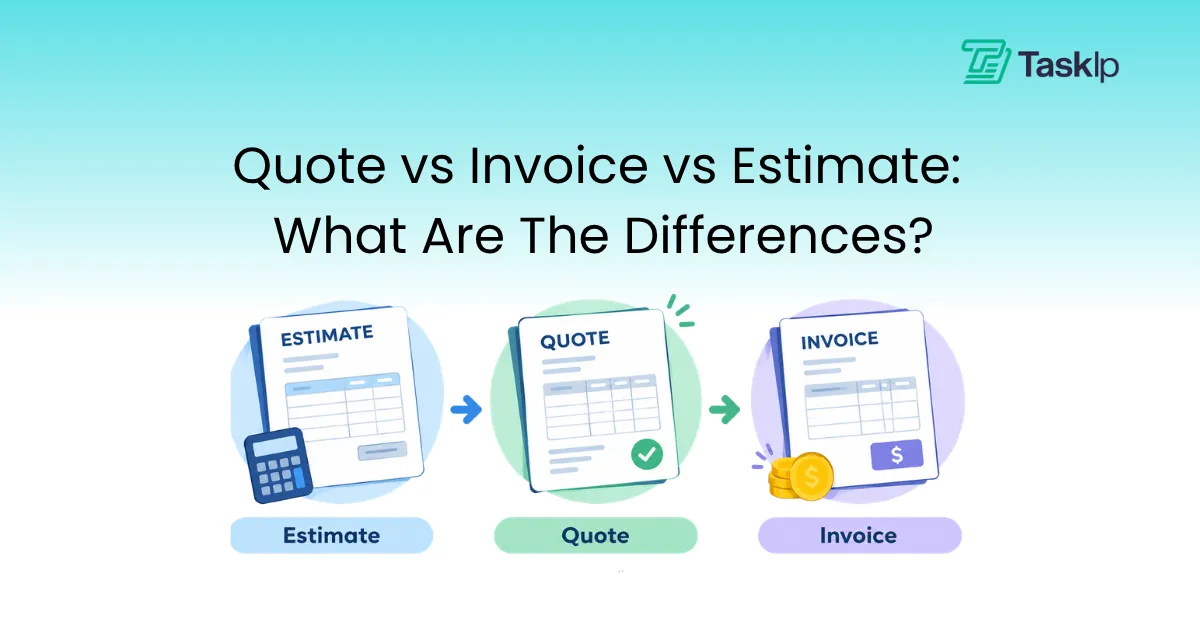
Quote vs Invoice vs Estimate: three documents that look alike but do very different jobs. Each one belongs to a different stage of a client deal. Send the wrong one, and you risk underpricing a project, confusing a client, or waiting weeks to get paid.
Table of Contents
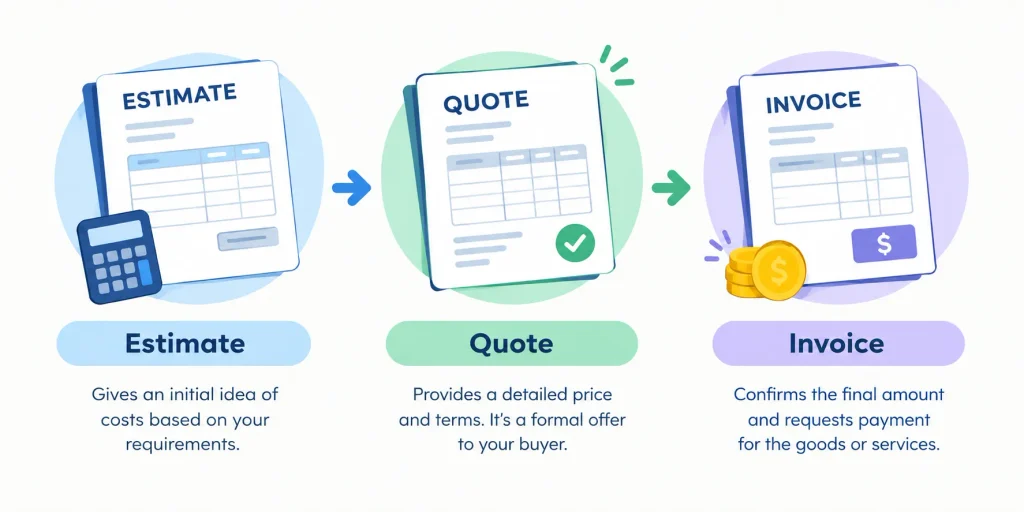
- An estimate is a rough, non-binding price you give before the project scope is final.
- A quote is a fixed price you commit to once the scope is confirmed and before work begins.
- An invoice is a formal request for payment you send after the work is delivered or a milestone is accepted.
The order is always the same: estimate → quote → invoice. The estimate starts the conversation, the quote locks the price, and the invoice gets you paid.
Quote vs Invoice vs Estimate: Comparison Table
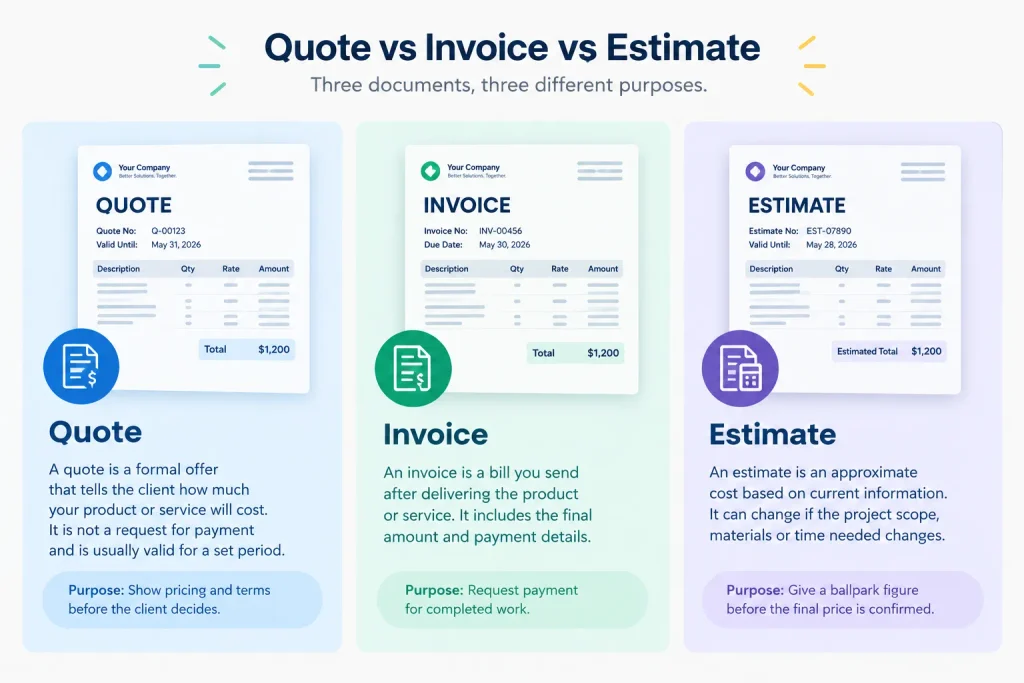
| Criteria | Estimate | Quote | Invoice |
|---|---|---|---|
| Purpose | Give a ballpark price | Commit to a fixed price | Request payment |
| Deal stage | Discovery, scope still open | Pre-work, scope confirmed | Post-delivery or milestone |
| Binding? | No, the price can change | Yes, once the client accepts | Yes, payment is now due |
| Price detail | A range or rough total | Itemized, exact total | Itemized, exact amount owed |
| Time limit | Rarely has one | Valid until an expiry date (often 15 to 30 days) | Payment due date (e.g. Net 15, Net 30) |
| Client action | Decides whether to continue | Accepts, signs, or rejects | Pays |
| Accounting record? | No | No | Yes, it records revenue |
What Is an Estimate?
An estimate is an educated guess at what a project will cost, based on what you know so far. It helps a prospect check whether you fit their budget before either side invests more time.
Because the scope isn’t locked, an estimate is not a promise. If a client asks “roughly how much for a new website?”, answering “$4,000 to $6,000” is an estimate. A service pricing calculator helps you land on a realistic range fast.
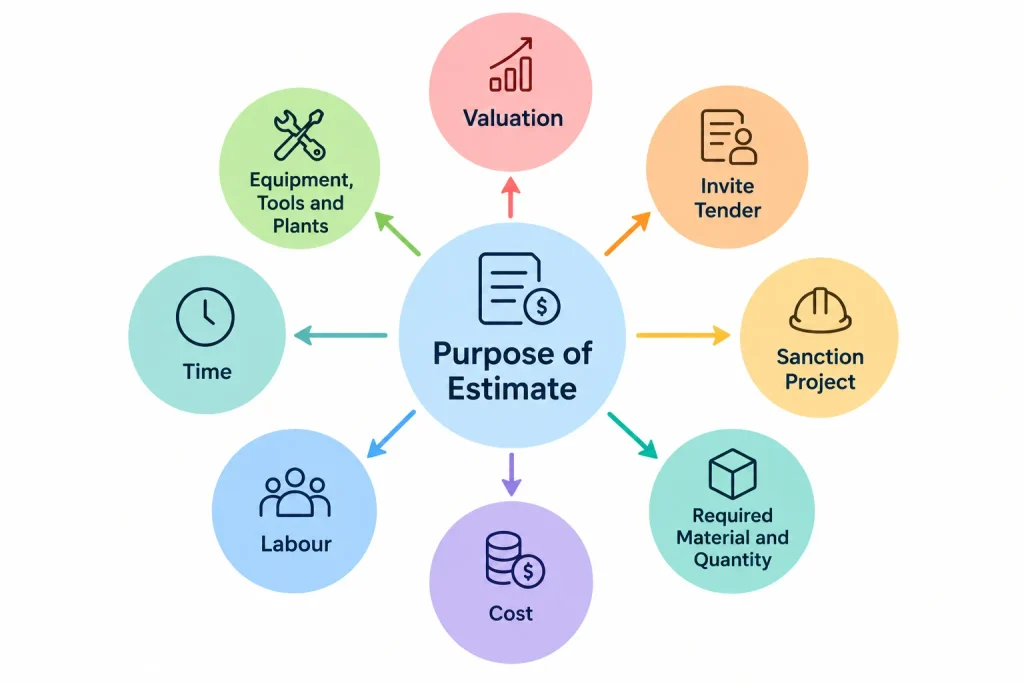
What to include in an estimate:
- A clear label that says “Estimate” (not “Quote”)
- A price range or approximate total
- The assumptions behind the number
- What could push the price up or down
- A note that a fixed quote follows once the scope of work is agreed
What is a Quote?
A quote, or quotation, is a fixed price for a clearly defined scope of work. You send it once you and the client agree on deliverables, timeline, and terms.
Once the client accepts, that price is what you both work to. As Homebuilding & Renovating puts it, a quote is considered binding, whereas an estimate is not. If the scope changes later, send a revised quote rather than surprising the client on the final bill.
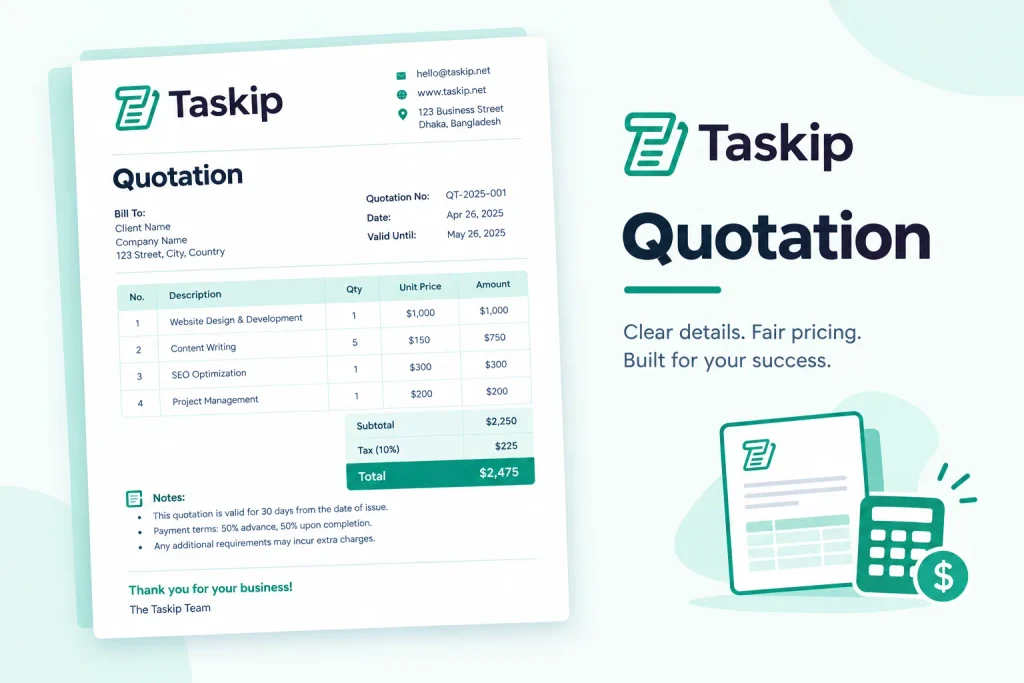
What to include in a quote:
- Quote number and issue date
- Your business details and the client’s details
- Itemized services with quantities, rates, and the total
- Taxes and any discounts
- Timeline and key deliverables
- An expiry date (how long the price holds)
- Clear quotation terms and conditions
- A way to accept, ideally a signature
Start from a ready quotation template, or build one in minutes with the free quotation generator.
Is a quote the same as an estimate?
No. An estimate says “it will probably cost about this.” A quote says “it will cost exactly this.”
Many freelancers use the two words interchangeably, and that is where billing disputes start. Label every document clearly so the client always knows whether the number can move.
What is an Invoice?
An invoice is a request for payment for work you have already delivered, or for a milestone the client has signed off. Unlike a quote, it is also an accounting record: the IRS lists invoices among the documents that support your gross receipts.
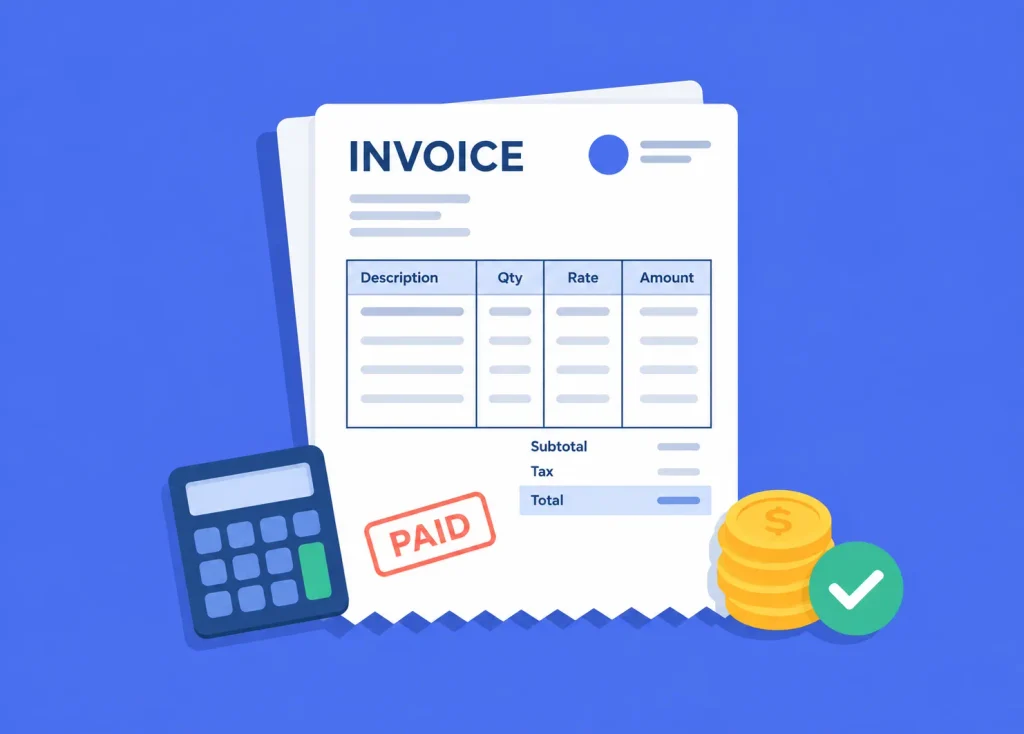
What to include in an invoice (based on GOV.UK’s invoice requirements):
- A unique invoice number
- Your business name, address, and contact details
- The client’s name and address
- A clear description of what you’re charging for
- The supply date and the invoice date
- The amounts charged, tax if applicable, and the total owed
- Invoice payment terms and accepted payment methods
You can grab a free invoice template or create one instantly with the free invoice generator.
Difference Between Quote and Invoice
The key difference between a quote and an invoice is timing and purpose. A quote comes before the work and asks for agreement. An invoice comes after and asks for money. A quote can be rejected or renegotiated; an invoice is a bill that is due.
Where Does a Pro Forma Invoice Fit?
A pro forma invoice sits between a quote and a final invoice. It looks like an invoice but is sent before the work is done, usually to request a deposit or to help a client get internal budget approval.
It is not a demand for payment and is not recorded as revenue. Once the work is delivered, you replace it with a real invoice. Agencies often use one when a client’s finance team needs “an invoice” before they can release an upfront payment. A pro forma invoice template keeps the format consistent.
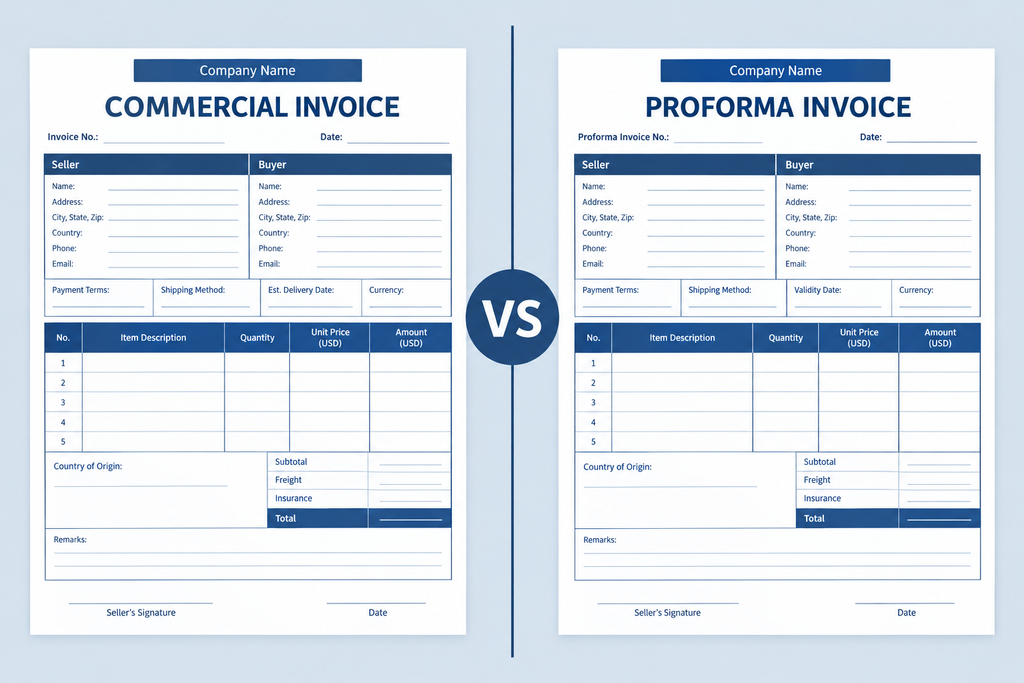
Proforma vs. Commercial Invoice
| Criteria | PROFORMA INVOICE | COMMERCIAL INVOICE |
|---|---|---|
| WHEN IS IT ISSUED? | Before the buyer places an order. | After the buyer and seller agree on the terms of sale and the goods are ready to ship. |
| PRIMARY PURPOSE | A quotation provided to a potential buyer. It serves as a negotiation tool and helps the buyer decide whether to place an order. | Outlines the final price. It informs the buyer that payment is due and provides critical information to parties involved in transporting the goods. |
| HOW IT’S USED | The buyer may use it to obtain necessary permits, obtain a letter of credit or other payment arrangements, and overcome import restrictions. | Used by customs to assess duties, taxes, and other import fees. It provides important instructions to the freight forwarder, the marine insurance company, and both parties’ banks. |
Example of Quote vs Invoice vs Estimate: One Agency Project, Three Documents
Here is how a typical web design deal moves through each stage. The numbers are illustrative.
| Stage | Document | What it says | Amount |
|---|---|---|---|
| 1. Discovery call | Estimate | “A 5-page marketing site usually runs $4,000 to $6,000, depending on content and integrations.” | $4,000 to $6,000 |
| 2. Scope agreed | Quote | Design $2,400 + development $2,200 + CMS setup $400 = $5,000. Valid 30 days. 50% upfront. | $5,000 fixed |
| 3. Client accepts | Pro forma invoice (optional) | 50% deposit request so the client’s finance team can release funds | $2,500 |
| 4. Site launched | Invoice | Final invoice, Net 15, referencing the accepted quote number | $2,500 balance |
Notice that the quote, not the estimate, sets the final number. And every invoice traces back to a quote the client already approved, so there is nothing to argue about.
How Estimates, Quotes, and Invoices Connect?
Think of the three documents as one deal moving forward. The slow part for most agencies is the handoff between quote and invoice. Someone copies line items from an accepted quote into a new invoice by hand, and small errors creep in.
In Taskip, you send branded quotes that convert to invoices as soon as the client accepts. Here is the flow:
- Send the quote: The client reviews it in your client portal and accepts with an e-signature.
- Convert in one click: Convert to an invoice with the same client, line items, and totals carried over. No re-entry, no mismatched numbers.
- Get paid online: The client pays the invoice by card through Stripe.
When to Send a Quote vs an Invoice (and an Estimate)
- Send an estimate on a first call or discovery email, when the client wants a number but the brief is still loose.
- Send a quote once scope, deliverables, and timeline are agreed and you are ready to start.
- Send an invoice when work is delivered, a milestone is signed off, or a retainer period begins.
Common Mistakes to Avoid
Here are the common mistakes to avoid while using Quote vs Invoice vs Estimate:
- Calling an estimate a quote. If the number can change, label it an estimate.
- Starting work without an accepted quote. Without a signed price, every invoice is open to dispute.
- Changing scope without paperwork. Log a change request and send a revised quote before doing extra work.
- Vague payment terms. Late payment is common: QuickBooks’ 2025 report found 56% of US small businesses are owed money from unpaid invoices. Set a due date, and use a late payment fee calculator to set a fair penalty up front.
The Bottom Line
Know the Quote vs Invoice vs Estimate clearly before using these terms. Estimate to start the conversation. Quote to lock the price. Invoice to get paid.
Keep the three clearly labeled and linked, and your clients always know where the deal stands. Want the whole flow in one place? See Taskip’s plans and send your first quote today.
FAQs on Estimate vs Quote vs Invoice
What is the difference between a quote, an invoice, and an estimate?
An estimate is a non-binding ballpark price, a quote is a fixed price the client accepts before work starts, and an invoice is a request for payment after the work is done.
Is a quote the same as an estimate?
No. An estimate is approximate and can change. A quote is a fixed price that becomes binding once the client accepts it.
Can a quote become an invoice?
Yes. An accepted quote becomes the basis for the invoice. In Taskip, you can turn an accepted quote into an invoice in one click.
Is an estimate legally binding?
Usually not, because it is an approximation. Rules vary by country, so check local guidance for large contracts.
Do I always need an estimate before a quote?
No. If the scope is clear from the start, skip the estimate and send a quote directly.
Can an invoice be different from the quote?
Only if the scope changed and the client approved it in writing. Otherwise, the invoice should match the accepted quote.
Is a pro forma invoice a real invoice?
No. It is a preliminary document used to request a deposit or get budget approval. It is replaced by a final invoice later.


